Physiocare Physiotherapy & Rehab Centre Ottawa

Now Open: Our 8th Location in South Keys!

Prosthetic Training & Mobility Treatment at Physiocare

Key Takeaways

✓ Specialized prosthetic training helps you adapt to your prosthesis and restore functional independence

✓ Evidence-based gait training improves walking patterns, balance, and reduces compensatory movements

✓ Advanced therapies like DNS and Red Cord address neuromuscular control for safer, more efficient movement

✓ Multi-location access across Ottawa ensures convenient, consistent care throughout your rehabilitation journey

Physiocare's Experience in Action

Updated on July 27, 2026
Prateeksha Viradiya
Written By
Prateeksha Viradiya
Resident Physiotherapist
Specializes in Aquatic Rehab and is a Certified Aquafit Instructor.

Gunjan Vermani
✓ Clinically Reviewed By:
Gunjan Vermani
Director and Registered Physiotherapist
15+ Years Experience
Clinical Specialties: Central pain management, Concussion rehabilitation

Understanding Prosthetic Training & Mobility

What Is Prosthetic Training & Mobility Rehabilitation?

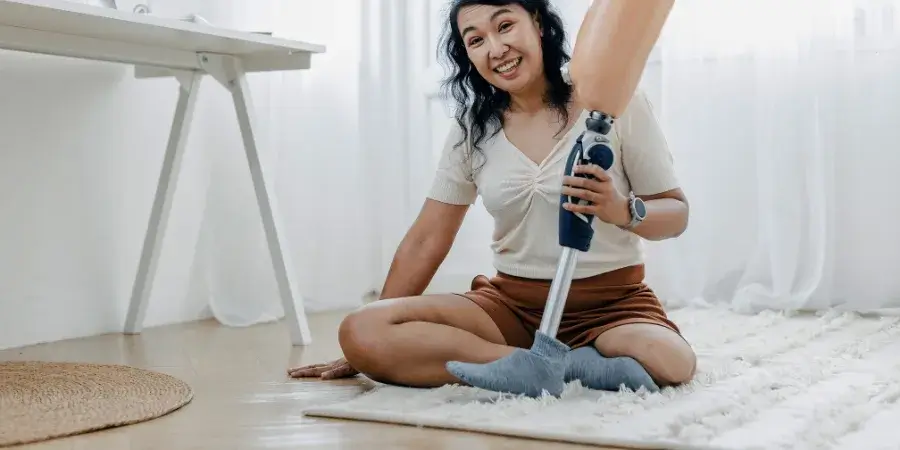
Prosthetic training is a specialized rehabilitation process that helps individuals who have undergone limb amputation learn to use their prosthetic device effectively and safely. This comprehensive program focuses on building strength, improving balance, retraining movement patterns, and developing the skills necessary for daily activities. The goal extends beyond simply wearing a prosthesis—it’s about restoring your independence, confidence, and quality of life through personalized therapeutic intervention.

Relevant Anatomy and Prosthetic Considerations

Understanding how your body adapts to a prosthetic limb is essential for successful rehabilitation:

  • Residual limb: The remaining portion of the amputated limb that interfaces with the prosthetic socket and requires conditioning for pressure tolerance
  • Sound limb: The non-amputated limb that often compensates during movement and needs strengthening to prevent overuse injuries
  • Core musculature: Abdominal and back muscles that provide stability and balance when adapting to altered biomechanics
  • Proprioceptive system: Sensory feedback mechanisms that must recalibrate to interpret movement and position without natural limb sensation
  • Prosthetic components: Socket, suspension system, knee/ankle mechanisms (if applicable) that must integrate seamlessly with your movement patterns
Prosthetic Training & Mobility Rehabilitation

Causes and Circumstances Leading to Prosthetic Need

Amputation may result from various medical and traumatic conditions:

  • Vascular disease: Peripheral artery disease or diabetes-related complications causing inadequate blood flow to extremities
  • Trauma: Motor vehicle accidents, workplace injuries, or severe crush injuries requiring surgical amputation
  • Infection: Severe infections like sepsis or necrotizing fasciitis that compromise limb viability
  • Cancer: Bone or soft tissue tumors requiring limb removal as part of oncological treatment
  • Congenital conditions: Birth differences where limbs did not fully develop, requiring early prosthetic intervention

Risk Factors for Prosthetic Adaptation Challenges

Certain factors may complicate the rehabilitation process:

  • Poor residual limb conditioning: Inadequate skin integrity, volume fluctuations, or pain sensitivity affecting prosthetic tolerance
  • Cardiovascular deconditioning: Reduced stamina and endurance making training sessions physically demanding
  • Psychological adjustment: Depression, anxiety, or body image concerns impacting motivation and engagement in rehabilitation
  • Inadequate prosthetic fit: Socket discomfort, alignment issues, or improper component selection limiting functional use
  • Concurrent medical conditions: Diabetes, obesity, arthritis, or neurological conditions complicating the rehabilitation trajectory

Common Symptoms and Functional Limitations

Individuals undergoing prosthetic training often experience:

  • Gait deviations: Limping, circumduction, vaulting, or uneven step length affecting walking efficiency and appearance
  • Balance difficulties: Unsteadiness during standing, transfers, or navigating uneven surfaces increasing fall risk
  • Residual limb discomfort: Socket pressure, skin irritation, phantom sensations, or neuromas causing pain during use
  • Compensatory strain: Overuse pain in the sound limb, back, or hips due to altered biomechanics
  • Reduced endurance: Fatigue limiting walking distance and participation in daily activities and community integration

Complications If Untreated

Without proper prosthetic training and rehabilitation, serious long-term consequences may develop:

  • Progressive gait abnormalities leading to chronic joint pain and degenerative changes
  • Increased fall risk resulting in fractures, head injuries, or loss of confidence
  • Sound limb overuse injuries including arthritis, tendinitis, and stress fractures
  • Social isolation and reduced quality of life from mobility limitations
  • Prosthetic abandonment and increased dependence on assistive devices or wheelchairs

Treatment at Physiocare for Prosthetic Training & Mobility

At Physiocare Physiotherapy & Rehab Centre, we understand that learning to use a prosthetic limb is both a physical and emotional journey. Our specialized rehabilitation programs combine evidence-based therapies with compassionate support to help you regain mobility, independence, and confidence in your daily life.

Comprehensive Treatment Approaches

DNS (Dynamic Neuromuscular Stabilization)

  • Restores optimal movement patterns by retraining the central nervous system’s control of posture and movement
  • Activates deep core stabilizers to improve balance and coordination with prosthetic integration
  • Addresses compensatory patterns that develop after amputation, reducing strain on remaining joints
  • Enhances proprioceptive awareness helping your brain reconnect with altered body mechanics

Red Cord Therapy (Neurac)

  • Uses suspension exercise to challenge neuromuscular control in a safe, supported environment
  • Progressively loads the residual and sound limbs to build strength without excessive joint stress
  • Improves weight-shifting ability and dynamic balance essential for confident prosthetic use
  • Identifies and corrects muscle imbalances that interfere with efficient gait patterns

Gait Training

  • Systematically teaches proper walking mechanics specific to your prosthetic type and functional goals
  • Addresses gait deviations like limping, uneven step length, and excessive energy expenditure
  • Progresses from parallel bars to independent ambulation across various surfaces and environments
  • Incorporates advanced skills like stairs, curbs, slopes, and community mobility challenges

Myofascial Release

  • Releases fascial restrictions in the residual limb, hips, and back that develop from altered movement
  • Reduces scar tissue adhesions around the amputation site improving tissue mobility and comfort
  • Addresses referred pain patterns that commonly arise from compensatory biomechanics
  • Improves circulation and tissue health supporting residual limb conditioning and prosthetic tolerance

Craniosacral Therapy

  • Addresses whole-body tension patterns and nervous system dysregulation following amputation
  • Supports emotional processing and trauma release that may accompany limb loss
  • Reduces phantom limb pain and hypersensitivity through gentle nervous system regulation
  • Promotes deep relaxation and stress reduction essential for optimal rehabilitation outcomes

How Physiotherapy Transforms Prosthetic Rehabilitation

Specialized physiotherapy is the cornerstone of successful prosthetic adaptation. Through targeted interventions, we address not only mobility challenges but also pain management, strength building, and functional independence. Our therapists create individualized programs that respect your unique circumstances, prosthetic components, and personal goals—whether returning to work, recreational activities, or simply moving confidently through your home.

Our Step-by-Step Approach

Assessment

Comprehensive evaluation of residual limb condition, prosthetic fit, movement patterns, strength, balance, and functional goals to establish baseline and identify specific challenges.

Personalized Plan

Collaborative development of a rehabilitation roadmap tailored to your prosthetic type, lifestyle requirements, and progression timeline with clear, achievable milestones.

Evidence-Based Treatment

Implementation of proven therapies including gait training, neuromuscular stabilization, manual therapy, and advanced modalities delivered by experienced prosthetic rehabilitation specialists.

Recovery & Prevention

Ongoing support for long-term success including home exercise programs, community reintegration strategies, and education to prevent complications while maximizing independence.

Location-Specific Prosthetic Training Services

Physiocare Physiotherapy & Rehab Centre - Nepean

  • Red Cord Therapy (Neurac)
  • Myofascial Release

Physiocare Physiotherapy & Rehab Centre - Westboro

  • DNS (Dynamic Neuromuscular Stabilization)
  • Myofascial Release
  • Craniosacral Therapy

Physiocare Physiotherapy & Rehab Centre - Kanata

  • DNS (Dynamic Neuromuscular Stabilization)
  • Red Cord Therapy (Neurac)
  • Myofascial Release
  • Craniosacral Therapy

Physiocare Physiotherapy & Rehab Centre - Stittsville

  • DNS (Dynamic Neuromuscular Stabilization)
  • Myofascial Release

Physiocare Physiotherapy & Rehab Centre - Barrhaven

  • Myofascial Release
  • Craniosacral Therapy

Why Choose Physiocare for Prosthetic Training & Mobility?

Our therapists hold advanced certifications in neuromuscular rehabilitation, gait analysis, and specialized prosthetic training methodologies. We combine cutting-edge therapies like DNS and Red Cord suspension training with compassionate, patient-centered care that honors your unique journey.

With six convenient locations across Ottawa, we provide consistent, high-quality care close to home. Whether you’re in Kanata, Barrhaven, or Westboro, you’ll find experienced physiotherapy in Ottawa that understands prosthetic rehabilitation requires not just clinical expertise, but genuine partnership in restoring your independence and confidence.

Frequently Asked Questions About Prosthetic Training & Mobility

Training typically begins once your residual limb has healed sufficiently, the swelling has stabilized, and your physician has cleared you—often 4-8 weeks post-surgery, though timelines vary individually.

Some discomfort during initial conditioning is normal as your residual limb adapts, but our therapists work within your tolerance, using pain management strategies to keep training productive and comfortable.

Duration varies based on amputation level, overall health, and goals—typically 3-6 months for basic mobility, with ongoing refinement for advanced activities and optimal function.

Previous challenges often stem from fit issues, inadequate training, or missing neuromuscular retraining. Our comprehensive approach addresses these gaps with advanced therapies many clinics don't offer.

While helpful, a referral is not required to begin physiotherapy in Ontario. You can book directly, and we'll coordinate with your prosthetist and medical team.

Yes, techniques like desensitization, mirror therapy, craniosacral therapy, and neuromuscular retraining have proven effective in reducing phantom sensations and pain for many individuals.

Many prosthetic users successfully return to athletics and recreation. We develop sport-specific training progressions and collaborate with adaptive sports organizations to support your goals.

Initially, 2-3 sessions weekly optimizes learning and conditioning. As you progress, frequency typically reduces while maintaining independence through home programs and periodic check-ins.

Bring your prosthesis, any liners or socks you use, comfortable clothing, relevant medical documents, and questions about your rehabilitation goals and concerns.

Many individuals notice improved confidence and reduced gait deviations within 2-4 weeks of consistent training, with continued refinement over subsequent months as neuromuscular patterns solidify.

Our Professional Team at Physiocare

Healing Hands, Happy Hearts: What Our Patients Say

Shawn LaBelle profile picture
Shawn LaBelle
2 months ago
I went here for physiotherapy. My shoulder is getting better after each treatment received. The staff here is exceptional. Thank you to Mehul, Surekha, Mike and Kamal. I definitely recommend coming here!
K G profile picture
K G
2 months ago
Due to injury, I needed to start physiotherapy at a new clinic because my previous physiotherapist is currently on maternity leave. To be honest, I was extremely nervous. As a plus size person, I was worried about being judged or body shamed, which unfortunately can be a real concern when seeking healthcare. I'm so grateful that my fears were completely unfounded. From the moment I called, the front desk staff was kind, welcoming, and respectful. They were able to get me in quickly, and I felt comfortable right from the start. My physiotherapist was compassionate, understanding, and completely focused on helping me recover from my injury—NOT on my body size. At no point did I feel judged, criticized, or made to feel uncomfortable. Instead, I felt listened to, respected, and supported. They took the time to explain everything, respected my boundaries, and only performed treatments that I was comfortable with. I never felt pressured into anything. Finding healthcare providers who treat you with dignity and respect can make all the difference, and that was absolutely my experience here. If you've ever been hesitant to seek treatment because you're worried about being judged for your body size, or the weight capacity of the physio tables I highly recommend this clinic. They made me feel safe, respected, and cared for throughout my visit.
Steve Simmons profile picture
Steve Simmons
2 months ago
The team at Physiocare are seasoned professionals and have shown care and understanding during my intense recovery. It is clear they are very experienced but also have excellent bedside manner. Highly recommend this establishment!
MC Chartrand profile picture
MC Chartrand
2 months ago
Excellent service and treatment. Efficient, friendly and understanding staff. Happy that I can continue to play my sports. Thank you Mehul and the excellent staff at your clinic.
Mac profile picture
Mac
5 months ago
I had a great experience at the clinic. Riddhi is very knowledgeable, professional, and caring. She takes the time to properly assess the problem and clearly explains the treatment plan.
Pooja and Ashish were excellent during my sessions. They were very attentive and supportive, always making sure the exercises were done correctly and safely. Their encouragement and positive attitude made the therapy sessions much easier and more motivating.
Samreen was very friendly and welcoming, was really helpful with scheduling appointments and answering questions.
Michael Belinson profile picture
Michael Belinson
5 months ago
I had a great experience at Physio Care and wanted to thank Vijay, Ashish, and Samreen for all their help. They were extremely professional, knowledgeable, and supportive throughout my recovery. They took the time to properly assess my injury, explain what was going on, and guide me through the right exercises and treatment to get me back on track. Everyone there created a really welcoming and positive environment, which made the whole process much easier. I really appreciate the care and attention they gave me and would highly recommend Physio Care to anyone looking for high-quality physiotherapy.
Adem mahamoud ali profile picture
Adem mahamoud ali
5 months ago
I had a very good experience with the physiotherapy team. Vani and Riddhi (Physiotherapists) were very professional, knowledgeable, and took the time to understand my condition and explain the treatment clearly. They made sure my recovery plan was right for me and always checked on my progress.

The physio assistants Samreen, Ashish, and Pooja were also very helpful, friendly, and supportive during the exercises and therapy sessions. They made sure I was comfortable and guided me properly through every step.

The whole team created a positive and welcoming environment, and I really appreciate their care and dedication. I highly recommend this clinic to anyone who needs physiotherapy.
Amber M profile picture
Amber M
5 months ago
I have been a patient at Physiocare on Greenbank for many years. The staff are very knowledgeable and friendly. You aren’t just a number here. The therapists care about you and want you to be feeling your best. Most recently I have been receiving regular weekly treatments by Nishika. She knows a lot about the body and the best ways to treat her patients. Her assistant Manjot is very kind and friendly and ensures your comfort when hooked up to machines. I enjoy chatting with her. Bhaumik has also stepped in to assist with my treatments when my regular team is busy helping other patients. His bedside manner is lovely and caring. He’s knowledgeable and goes the extra mile to ensure that you understand the treatment or exercise and that you are comfortable. I highly recommend this location for your physiotherapy.
Dharmik Prajapati profile picture
Dharmik Prajapati
6 months ago
I had a great experience at this physiotherapy clinic physiocare (nepean) is highly professional, knowledgeable, and very patient in explaining each treatment. I noticed significant improvement in my condition thanks to their guidance and care.
I would also like to appreciate. Bhaumik panchal for being extremely supportive, polite, and well-organized. The overall environment was comfortable and welcoming.
I highly recommend this clinic to anyone looking for quality physiotherapy treatment.
Citations and References

  1. Canadian Association of Prosthetists and Orthotists (CAPO). (2023). Clinical Practice Guidelines for Lower Limb Prosthetic Rehabilitation. Retrieved from https://www.capo.ca/
  2. Highsmith, M. J., et al. (2024). Neuromuscular training improves gait efficiency and reduces compensatory movement patterns in transtibial prosthetic users. Journal of Rehabilitation Research and Development, 61(2), 145-158. https://pubmed.ncbi.nlm.nih.gov/
  3. Mayo Clinic. (2024). Limb Loss: Rehabilitation and Prosthetic Training. Retrieved from https://www.mayoclinic.org/
  4. Webster, J. B., et al. (2023). Prosthetic Rehabilitation for Lower Limb Amputation: A Systematic Review. Physical Medicine and Rehabilitation Clinics of North America, 34(4), 789-812. https://pubmed.ncbi.nlm.nih.gov/
  5. Amputee Coalition. (2024). First Steps: A Guide to Adapting to Limb Loss. Retrieved from https://www.amputee-coalition.org/


Request Appointment

Request For Callback


This will close in 0 seconds

Register for Event

Please fill the form below to book your slot for the event

This will close in 0 seconds

Call Now Button