Physiocare Physiotherapy & Rehab Centre Ottawa

Now Open: Our 8th Location in South Keys!

Ankle Osteoarthritis Treatment at Physiocare

Key Takeaways

✓ Ankle osteoarthritis causes progressive joint pain, stiffness, and reduced mobility that worsens over time
✓ Advanced physiotherapy treatments including shockwave therapy, laser, and manual techniques effectively manage symptoms
✓ Early intervention prevents severe complications like chronic pain, joint deformity, and functional limitations
✓ Physiocare offers personalized, evidence-based treatment plans across six convenient Ottawa locations

Physiocare's Experience in Action

Updated on July 25, 2026
Prateeksha Viradiya
Written By
Prateeksha Viradiya
Resident Physiotherapist
Specializes in Aquatic Rehab and is a Certified Aquafit Instructor.

Gunjan Vermani
✓ Clinically Reviewed By:
Gunjan Vermani
Director and Registered Physiotherapist
15+ Years Experience
Clinical Specialties: Central pain management, Concussion rehabilitation

Understanding Ankle Osteoarthritis

What Is Ankle Osteoarthritis?

Ankle osteoarthritis is a degenerative joint condition where the protective cartilage cushioning the ankle bones gradually wears away. This cartilage breakdown causes bone-on-bone friction, leading to inflammation, pain, and reduced joint function. Unlike other forms of arthritis, ankle osteoarthritis often develops after previous injuries rather than age alone.

The condition progresses slowly, beginning with occasional discomfort and advancing to persistent pain that limits daily activities. Early recognition and treatment significantly improve long-term outcomes and quality of life.

Ankle Anatomy and How Osteoarthritis Affects It

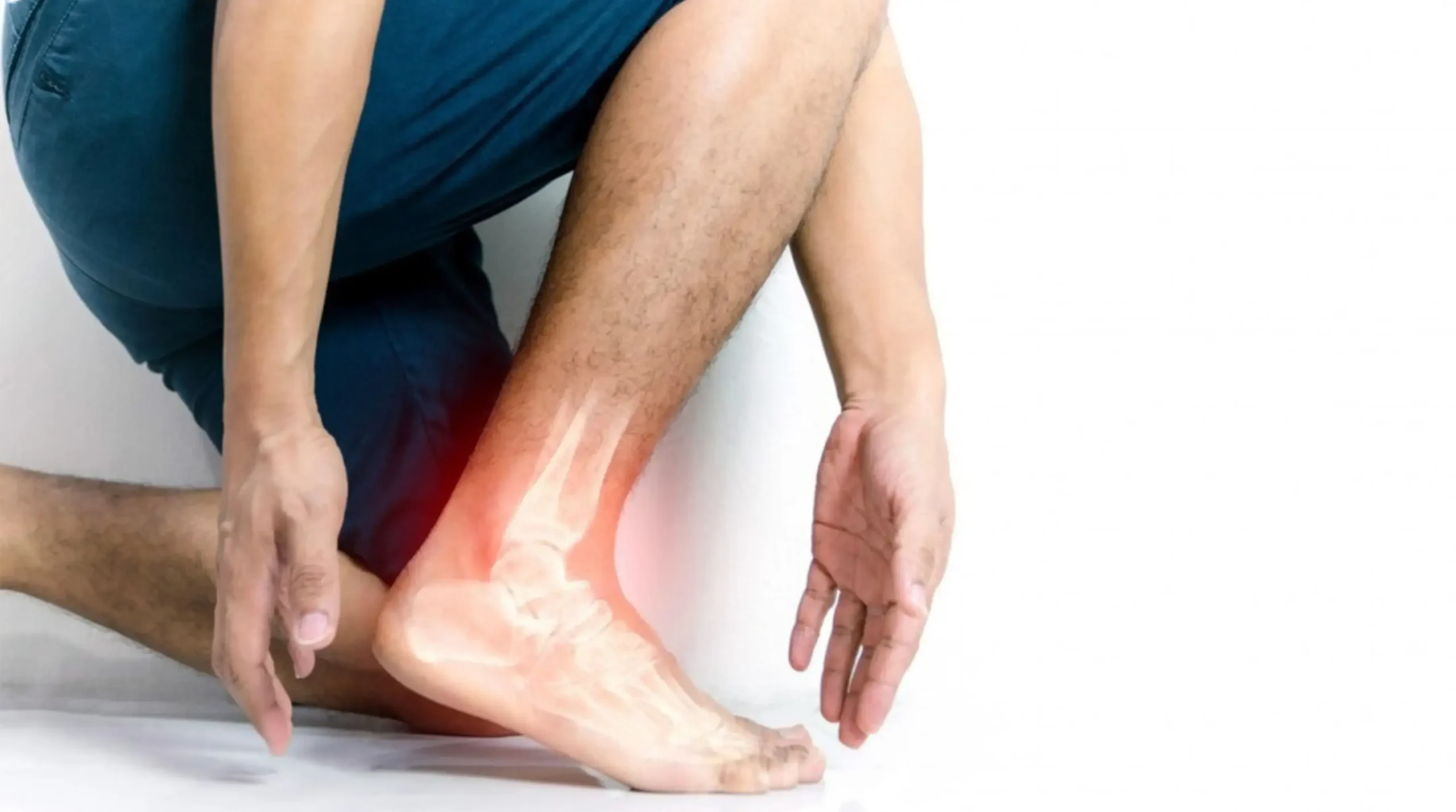
Your ankle joint is where three bones meet:

  • Tibia (shinbone): Forms the inner ankle structure and bears most of your body weight
  • Fibula (outer leg bone): Provides stability to the outer ankle
  • Talus (foot bone): Connects your leg to your foot, allowing up-and-down movement

Smooth articular cartilage covers these bone surfaces, enabling frictionless movement. When osteoarthritis develops, this cartilage deteriorates, exposing underlying bone. Your body responds by forming bone spurs (osteophytes) and producing excess joint fluid, causing swelling and stiffness.

The synovial membrane lining the joint becomes inflamed, releasing chemicals that further damage cartilage and surrounding tissues.

Causes and Mechanism of Injury

Post-traumatic development: Previous ankle fractures, severe sprains, or ligament tears significantly increase osteoarthritis risk. Even injuries from years ago can trigger cartilage breakdown.

Repetitive stress: High-impact activities like running, jumping, or sports involving sudden direction changes gradually wear down cartilage over time.

Structural abnormalities: Ankle misalignment, flat feet, or inherited joint irregularities create uneven pressure distribution, accelerating cartilage deterioration.

Inflammatory conditions: Rheumatoid arthritis or gout can damage ankle cartilage and contribute to secondary osteoarthritis development.

Risk Factors for Ankle Osteoarthritis

  • Poor footwear: Unsupportive or worn-out footwear can alter ankle mechanics and increase stress on the joint over time.
  • Previous untreated ankle injuries: Inadequately rehabilitated sprains, fractures, or ligament injuries can lead to chronic instability and accelerate joint degeneration.

Common Symptoms

  • Deep, aching joint pain that worsens with activity and improves with rest
  • Morning stiffness lasting 20-30 minutes after waking
  • Swelling around the ankle, especially after walking or standing
  • Reduced range of motion making it difficult to point toes or flex foot
  • Visible joint deformity or enlargement: Advanced osteoarthritis may cause changes in ankle shape due to bone spur (osteophyte) formation.
  • Tender bony prominences around the joint: Bone spurs may contribute to localized discomfort and reduced movement.
  • Pain during weather changes, particularly cold or damp conditions
  • Difficulty with stairs, uneven surfaces, or prolonged walking

Complications If Untreated

  • Chronic pain syndrome requiring ongoing medication management
  • Progressive joint deformity altering gait and foot positioning
  • Secondary knee and hip problems from compensatory movement patterns
  • Complete loss of cartilage potentially necessitating ankle fusion or replacement
  • Reduced independence and decreased quality of life
  • Increased fall risk due to instability and pain

Treatment at Physiocare for Ankle Osteoarthritis

Comprehensive Treatment Options Available

Maitland Mobilizations

  • Gentle, graded joint movements that reduce pain and restore normal ankle mechanics
  • Improves synovial fluid distribution to nourish remaining cartilage
  • Addresses specific movement restrictions through precise manual techniques
  • Reduces joint inflammation and decreases protective muscle guarding

Mulligan Mobilizations

  • Combines joint mobilization with active movement to restore pain-free function
  • Corrects positional faults within the ankle joint complex
  • Immediately reduces pain during weight-bearing activities
  • Teaches self-treatment techniques for ongoing symptom management

Spinal Manipulation (Regional)

  • Addresses biomechanical dysfunction in the lower back and leg affecting ankle mechanics
  • Improves nerve function and reduces referred pain patterns
  • Enhances overall lower limb alignment and weight distribution
  • Availability may vary by location. Please contact your nearest Physiocare clinic for details.

Myofascial Release

  • Releases tight fascia and muscle tissue surrounding the ankle joint
  • Improves blood flow and tissue healing capacity
  • Reduces compensatory tension in calf muscles and foot structures
  • Enhances flexibility and reduces pain during movement

Exercise-Based Rehabilitation 

Individualized exercise programs are a cornerstone of ankle osteoarthritis management.

  • Strengthening exercises improve support from the calf, foot, and lower leg muscles.
  • Stretching programs help maintain ankle flexibility and reduce stiffness.
  • Proprioceptive and balance training improve joint stability and reduce fall risk.
  • Functional retraining focuses on walking, stair climbing, and daily activities to improve confidence and mobility.
  • Progressive loading strategies help patients remain active while minimizing symptom flare-ups.

Footwear and Orthotic Support 

Proper footwear plays an important role in reducing stress on arthritic ankle joints.

  • Recommendations for supportive footwear based on individual gait and activity levels.
  • Education on shock-absorbing and stability-enhancing shoe features.
  • Custom or prefabricated orthotics may help improve alignment and distribute forces more evenly through the foot and ankle.
  • Strategies to reduce discomfort during prolonged standing, walking, and recreational activities.

Laser Therapy

  • Penetrates deep into soft tissues to help reduce pain and inflammation.
  • May support tissue healing and improve comfort during movement.
  • Provides a non-invasive option for symptom management without medication.
  • Available through our Laser Therapy program

TENS (Transcutaneous Electrical Nerve Stimulation)

  • Blocks pain signals to provide immediate symptomatic relief
  • Stimulates natural endorphin production for lasting comfort
  • Non-addictive pain management option suitable for long-term use
  • Portable units available for home management

IFC (Interferential Current)

  • Deeper penetration than TENS for treating joint inflammation
  • Reduces swelling and promotes tissue healing
  • Improves circulation to enhance nutrient delivery to damaged cartilage
  • Effective for both acute flare-ups and chronic management

Acupuncture

  • Traditional technique that reduces pain and inflammation naturally
  • Releases endorphins and modulates pain perception
  • Addresses both local ankle symptoms and systemic imbalances
  • Learn more about our Acupuncture services

Shockwave Therapy

  • High-energy acoustic waves may help reduce pain and improve function in chronic musculoskeletal conditions.
  • Stimulates local tissue responses that may support healing and recovery.
  • Can be used alongside exercise and manual therapy as part of a comprehensive treatment plan.
  • Available through our Therapeutic Shockwave Therapy program

DOT (Deep Oscillation Therapy)

  • Electrostatic vibrations penetrate deep tissues without excessive external pressure.
  • May help reduce swelling and inflammation in irritated tissues.
  • Can assist with pain relief and improve comfort during rehabilitation.
  • Explore Deep Oscillation Therapy details

Radio Frequency (StimPod)

  • Advanced neuromodulation technology that resets pain pathways
  • Improves muscle activation around the ankle for better joint support
  • Reduces chronic pain signals in the nervous system
  • Available through Radio Frequency Therapy

EMTT (Extracorporeal Magnetotransduction Therapy)

  • Advanced electromagnetic therapy designed to support pain management and recovery.
  • May help reduce inflammation and improve tissue function.
  • Non-invasive treatment option that can complement a broader rehabilitation program.
  • Exclusively available at our Kanata location through EMTT Therapy

How Physiotherapy Helps Manage Ankle Osteoarthritis

Physiotherapy addresses both symptoms and underlying biomechanical factors contributing to ankle osteoarthritis. Our treatments reduce pain and inflammation while improving joint mobility and strength. We develop personalized exercise programs focused on improving strength, mobility, balance, and functional movement while helping reduce stress on the affected joint. Through patient education, we empower you with self-management strategies that provide lasting relief beyond clinic visits.

Our Step-by-Step Approach

Assessment: Comprehensive evaluation including movement analysis, pain assessment, joint testing, and functional screening to identify all contributing factors.

Personalized Plan: Customized treatment protocol combining appropriate manual therapies, modalities, and exercises based on your specific condition severity and goals.

Evidence-Based Treatment: Progressive therapy sessions using proven techniques, with regular monitoring to adjust interventions as you improve.

Recovery & Prevention: Education on joint protection strategies, home exercises, footwear recommendations, orthotic considerations when appropriate, and long-term self-management strategies to help maintain function and manage symptoms effectively.

Location-Specific Treatment Availability

Physiocare Physiotherapy & Rehab Centre - Nepean

  • Spinal Manipulation (regional)
  • Myofascial Release
  • Laser
  • TENS
  • IFC
  • Shockwave
  • DOT (Deep Oscillation Therapy)
  • Radio Frequency (StimPod)

Physiocare Physiotherapy & Rehab Centre - Carling

  • Myofascial Release
  • Laser
  • TENS
  • IFC
  • DOT (Deep Oscillation Therapy)
  • Radio Frequency (StimPod)

Physiocare Physiotherapy & Rehab Centre - Westboro

  • Myofascial Release
  • Laser
  • TENS
  • IFC
  • Shockwave
  • DOT (Deep Oscillation Therapy)
  • Radio Frequency (StimPod)

Physiocare Physiotherapy & Rehab Centre - Kanata

  • Myofascial Release
  • Laser
  • TENS
  • IFC
  • Shockwave
  • DOT (Deep Oscillation Therapy)
  • Radio Frequency (StimPod)
  • EMTT (Storz)

Physiocare Physiotherapy & Rehab Centre - Stittsville

  • Spinal Manipulation (regional)
  • Myofascial Release
  • Laser
  • TENS
  • IFC
  • DOT (Deep Oscillation Therapy)
  • Radio Frequency (StimPod)

Physiocare Physiotherapy & Rehab Centre - Barrhaven

  • Spinal Manipulation (regional)
  • Myofascial Release
  • Laser
  • TENS
  • IFC
  • Shockwave

Physiocare Physiotherapy & Rehab Centre - South Keys

  • Myofascial Release
  • Laser
  • TENS
  • IFC
  • Shockwave
  • DOT (Deep Oscillation Therapy)
  • Radio Frequency (StimPod)

Why Choose Physiocare for Ankle Osteoarthritis?

Our therapists hold advanced certifications in Manual Therapy, joint mobilization, and Arthritis Care, ensuring you receive specialized expertise for degenerative conditions. We combine traditional hands-on techniques with cutting-edge technologies like EMTT and shockwave therapy for superior outcomes.

Every treatment plan reflects your unique symptoms, lifestyle, and recovery goals. As a leading physio clinic in Ottawa, we provide convenient access across six locations with flexible scheduling, making consistent care easy to maintain. Our patient-centered approach means we listen, adapt, and support you throughout your entire recovery journey.

Frequently Asked Questions

Most patients notice reduced pain within 4-6 treatment sessions. Significant functional improvement typically occurs within 8-12 weeks with consistent therapy.

Our therapists carefully adjust techniques to your comfort level. While some mild discomfort may occur during mobilizations, treatment should never cause severe pain.

Previous unsuccessful treatment often means the wrong approach was used. Our comprehensive assessment identifies specific factors causing your symptoms for targeted intervention.

No referral is necessary. You can book directly with us. However, physician referrals may be required for certain insurance coverage.

While cartilage damage is permanent, physiotherapy effectively manages symptoms, slows progression, and often eliminates the need for surgery through conservative care.

Initial treatment typically involves 2-3 sessions weekly for 3-4 weeks, then reduces to weekly maintenance as symptoms improve.

Coverage varies by insurance plan. Our administrative team helps verify your benefits and explains payment options during your first visit.

Yes, with modifications. We design activity-specific programs that maintain fitness while protecting your joints from excessive stress.

Untreated osteoarthritis typically progresses, causing increasing pain, deformity, and functional limitations that may eventually require surgical intervention.

With proper home exercise maintenance and periodic check-ins, most patients maintain significant improvements long-term. Arthritis requires ongoing management for best outcomes.

Our Professional Team at Physiocare

Healing Hands, Happy Hearts: What Our Patients Say

Shawn LaBelle profile picture
Shawn LaBelle
2 months ago
I went here for physiotherapy. My shoulder is getting better after each treatment received. The staff here is exceptional. Thank you to Mehul, Surekha, Mike and Kamal. I definitely recommend coming here!
K G profile picture
K G
2 months ago
Due to injury, I needed to start physiotherapy at a new clinic because my previous physiotherapist is currently on maternity leave. To be honest, I was extremely nervous. As a plus size person, I was worried about being judged or body shamed, which unfortunately can be a real concern when seeking healthcare. I'm so grateful that my fears were completely unfounded. From the moment I called, the front desk staff was kind, welcoming, and respectful. They were able to get me in quickly, and I felt comfortable right from the start. My physiotherapist was compassionate, understanding, and completely focused on helping me recover from my injury—NOT on my body size. At no point did I feel judged, criticized, or made to feel uncomfortable. Instead, I felt listened to, respected, and supported. They took the time to explain everything, respected my boundaries, and only performed treatments that I was comfortable with. I never felt pressured into anything. Finding healthcare providers who treat you with dignity and respect can make all the difference, and that was absolutely my experience here. If you've ever been hesitant to seek treatment because you're worried about being judged for your body size, or the weight capacity of the physio tables I highly recommend this clinic. They made me feel safe, respected, and cared for throughout my visit.
Steve Simmons profile picture
Steve Simmons
2 months ago
The team at Physiocare are seasoned professionals and have shown care and understanding during my intense recovery. It is clear they are very experienced but also have excellent bedside manner. Highly recommend this establishment!
MC Chartrand profile picture
MC Chartrand
2 months ago
Excellent service and treatment. Efficient, friendly and understanding staff. Happy that I can continue to play my sports. Thank you Mehul and the excellent staff at your clinic.
Mac profile picture
Mac
5 months ago
I had a great experience at the clinic. Riddhi is very knowledgeable, professional, and caring. She takes the time to properly assess the problem and clearly explains the treatment plan.
Pooja and Ashish were excellent during my sessions. They were very attentive and supportive, always making sure the exercises were done correctly and safely. Their encouragement and positive attitude made the therapy sessions much easier and more motivating.
Samreen was very friendly and welcoming, was really helpful with scheduling appointments and answering questions.
Michael Belinson profile picture
Michael Belinson
5 months ago
I had a great experience at Physio Care and wanted to thank Vijay, Ashish, and Samreen for all their help. They were extremely professional, knowledgeable, and supportive throughout my recovery. They took the time to properly assess my injury, explain what was going on, and guide me through the right exercises and treatment to get me back on track. Everyone there created a really welcoming and positive environment, which made the whole process much easier. I really appreciate the care and attention they gave me and would highly recommend Physio Care to anyone looking for high-quality physiotherapy.
Adem mahamoud ali profile picture
Adem mahamoud ali
5 months ago
I had a very good experience with the physiotherapy team. Vani and Riddhi (Physiotherapists) were very professional, knowledgeable, and took the time to understand my condition and explain the treatment clearly. They made sure my recovery plan was right for me and always checked on my progress.

The physio assistants Samreen, Ashish, and Pooja were also very helpful, friendly, and supportive during the exercises and therapy sessions. They made sure I was comfortable and guided me properly through every step.

The whole team created a positive and welcoming environment, and I really appreciate their care and dedication. I highly recommend this clinic to anyone who needs physiotherapy.
Amber M profile picture
Amber M
5 months ago
I have been a patient at Physiocare on Greenbank for many years. The staff are very knowledgeable and friendly. You aren’t just a number here. The therapists care about you and want you to be feeling your best. Most recently I have been receiving regular weekly treatments by Nishika. She knows a lot about the body and the best ways to treat her patients. Her assistant Manjot is very kind and friendly and ensures your comfort when hooked up to machines. I enjoy chatting with her. Bhaumik has also stepped in to assist with my treatments when my regular team is busy helping other patients. His bedside manner is lovely and caring. He’s knowledgeable and goes the extra mile to ensure that you understand the treatment or exercise and that you are comfortable. I highly recommend this location for your physiotherapy.
Dharmik Prajapati profile picture
Dharmik Prajapati
6 months ago
I had a great experience at this physiotherapy clinic physiocare (nepean) is highly professional, knowledgeable, and very patient in explaining each treatment. I noticed significant improvement in my condition thanks to their guidance and care.
I would also like to appreciate. Bhaumik panchal for being extremely supportive, polite, and well-organized. The overall environment was comfortable and welcoming.
I highly recommend this clinic to anyone looking for quality physiotherapy treatment.
Citations and References

  1. Saltzman CL, Salamon ML, Blanchard GM, et al. “Epidemiology of ankle arthritis: report of a consecutive series of 639 patients from a tertiary orthopaedic center.” Iowa Orthop J. 2005;25:44-46. PMID: 16089071.
  2. Thomas AC, Hubbard-Turner T, Wikstrom EA, Palmieri-Smith RM. “Epidemiology of Posttraumatic Osteoarthritis.” J Athl Train. 2017;52(6):491-496. doi:10.4085/1062-6050-51.5.08
  3. Valtonen A, Pöyhönen T, Heinonen A, Sipilä S. “Muscle deficits persist after unilateral knee replacement and have implications for rehabilitation.” Phys Ther. 2009;89(10):1072-1079. doi:10.2522/ptj.20070295
  4. Golditz T, Steib S, Pfeifer K, et al. “Functional ankle instability as a risk factor for osteoarthritis: using T2-mapping to analyze early cartilage degeneration in the ankle joint of young athletes.” Osteoarthritis Cartilage. 2014;22(10):1377-1385. doi:10.1016/j.joca.2014.04.029
  5. Valderrabano V, Horisberger M, Russell I, Dougall H, Hintermann B. “Etiology of ankle osteoarthritis.” Clin Orthop Relat Res. 2009;467(7):1800-1806. doi:10.1007/s11999-008-0543-6
  6. Menz HB, Dufour AB, Katz P, Hannan MT. “Foot pain and functional limitation in older adults: the Framingham Foot Study.” J Gerontol A Biol Sci Med Sci. 2013;68(10):1281-1285. doi:10.1093/gerona/glt048
  7. Canadian Physiotherapy Association. “Osteoarthritis: Clinical Practice Guidelines.” CPA Guidelines. 2023. Available at: https://physiotherapy.ca/osteoarthritis-guidelines
Request Appointment

Request For Callback


This will close in 0 seconds

Register for Event

Please fill the form below to book your slot for the event

This will close in 0 seconds

Call Now Button