Understanding Cancer-Related Rehabilitation
What Is Cancer-Related Rehabilitation and Why Does It Matter?
Cancer-related rehabilitation is a specialized area of physiotherapy designed to address the physical effects that cancer and its treatments — surgery, chemotherapy, and radiation — leave on the body.
Unlike general physiotherapy, oncology rehabilitation is adapted to the unique vulnerabilities of individuals with cancer. It meets patients wherever they are: during active treatment, immediately after, or years into survivorship. The goal is to restore as much function, comfort, and independence as possible.
How Cancer and Its Treatments Affect the Body's Systems
Understanding why cancer rehabilitation is necessary begins with understanding the tissues and systems most commonly disrupted:
The Lymphatic System
- Cancer surgeries — particularly those involving lymph node removal — can disrupt lymphatic drainage pathways, leading to lymphedema (swelling caused by fluid accumulation).
- Radiation can cause fibrosis (scarring) of lymphatic vessels, compounding drainage impairment.
Musculoskeletal Tissues
- Surgical removal of tumours or reconstructive procedures alter the mechanical integrity of muscles, fascia, tendons, and joints.
- Prolonged inactivity during treatment leads to muscle atrophy and joint stiffness.
The Nervous System
- Chemotherapy-induced peripheral neuropathy (CIPN) affects sensation and motor coordination in the hands and feet.
- Neurological fatigue — distinct from ordinary tiredness — impacts balance, concentration, and movement quality.
Fascia and Connective Tissue
- Radiation fibrosis causes deep connective tissue to harden and lose pliability, restricting movement and creating chronic pain patterns.
Causes and Mechanisms Behind Cancer-Related Physical Decline
The physical consequences of cancer are rarely caused by the disease alone — they are often the cumulative result of treatment and its side effects:
- Surgical trauma: Incisions, tissue removal, and reconstructive procedures disrupt the structural continuity of muscles and connective tissue, causing pain, scar tissue formation, and movement restrictions.
- Chemotherapy toxicity: Many chemotherapy agents damage peripheral nerves (neuropathy), deplete bone density, and cause systemic fatigue that undermines physical function.
- Radiation effects: Targeted radiation damages not only cancer cells but surrounding healthy tissue, often resulting in skin changes, fibrosis, lymphatic scarring, and localized pain.
- Immobility during treatment: Prolonged rest or reduced activity leads to deconditioning — loss of cardiovascular endurance, muscle strength, and joint range of motion.
Who Is at Risk of Significant Physical Decline After Cancer Treatment?
Cancer-related physical impairment can affect anyone undergoing treatment, but certain factors increase the likelihood of significant functional challenges:
- Breast cancer survivors who have undergone axillary lymph node dissection or radiation, placing them at high risk for upper-limb lymphedema and shoulder dysfunction.
- Head and neck cancer patients experiencing jaw restriction (trismus), neck stiffness, and swallowing difficulties following radiation.
- Colorectal and pelvic cancer survivors dealing with pelvic floor dysfunction, bowel changes, and scar tissue pain.
- Older adults whose baseline fitness and tissue resilience are lower, making recovery from deconditioning more challenging.
- Individuals who received high cumulative radiation doses or multiple chemotherapy cycles, increasing peripheral nerve and connective tissue damage.
- Those with pre-existing musculoskeletal conditions who face compounded functional limitations post-treatment.
Common Symptoms Addressed in Cancer Rehabilitation
Patients referred for or seeking cancer rehabilitation typically present with one or more of the following:
Pain and Discomfort
- Post-surgical pain at incision sites or reconstructed areas
- Chemotherapy-induced joint and muscle aching (arthralgia and myalgia)
- Radiation-related skin tightness and deep tissue pain
Swelling and Fluid Retention
- Lymphedema of the arm, leg, trunk, or face following lymph node removal
- Pitting oedema from reduced physical activity or compromised venous return
Movement and Strength Limitations
- Reduced shoulder range of motion after breast cancer surgery
- Neck stiffness and trunk weakness following thoracic or abdominal procedures
- Overall deconditioning and loss of functional independence
Neurological Symptoms
- Tingling, numbness, or burning in the hands or feet (chemotherapy-induced peripheral neuropathy)
- Balance and coordination difficulties
- Cancer-related fatigue affecting daily activity and quality of life
Psychological and Functional Impact
- Anxiety about movement or re-injury
- Loss of confidence in physical abilities
- Difficulty returning to work, exercise, or routine activities
Complications When Cancer Rehabilitation Is Delayed or Avoided
Left unaddressed, the physical side effects of cancer treatment often worsen over time:
- Lymphedema can progress from manageable swelling to chronic, irreversible tissue changes requiring ongoing intensive management.
- Untreated scar tissue and fascia fibrosis leads to permanent range-of-motion loss and chronic pain.
- Deconditioning increases fall risk, cardiovascular vulnerability, and long-term disability.
- Peripheral neuropathy without rehabilitation progresses to sustained balance and gait impairment.
Treatment at Physiocare for Cancer-Related Rehabilitation
Evidence-Based Therapies Offered Across Physiocare’s Ottawa Clinics
Each treatment below is selected specifically because it addresses the pathological processes triggered by cancer and its treatment — not because it is a general wellness modality.
DNS — Dynamic Neuromuscular Stabilization (Available at: Westboro, Kanata, Stittsville)
- Cancer treatment frequently disrupts the deep postural stabilization system — the diaphragm, pelvic floor, and intrinsic spinal muscles — through surgery, inactivity, and neurological changes.
- DNS reactivates these inhibited stabilizing muscles using developmental movement patterns that bypass the voluntary nervous system, re-establishing core control at a neurological level.
- For cancer survivors experiencing trunk weakness, postural dysfunction, or difficulty initiating safe movement after prolonged treatment, DNS provides a structured, safe starting point for functional recovery.
- It is particularly valuable in post-surgical cases where traditional exercise-based core training is contraindicated in the early stages.
Explore Dynamic Neuromuscular Stabilization at Physiocare for further details on how DNS supports neurological and postural recovery.
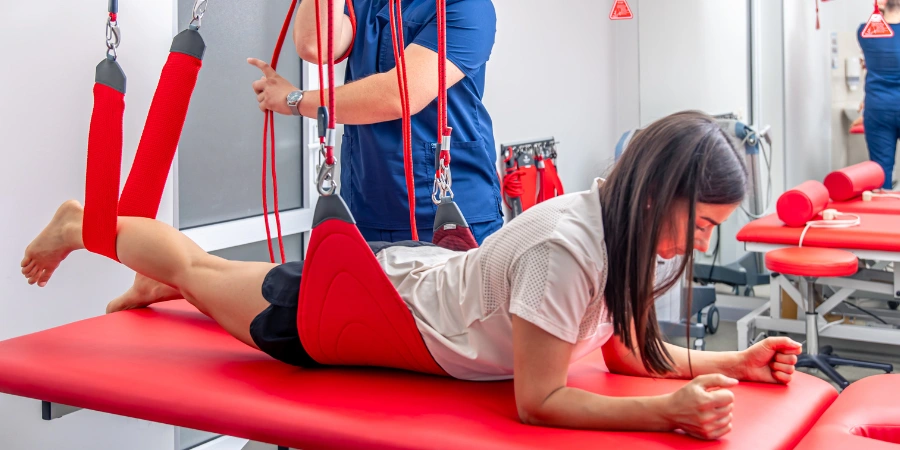
Red Cord Therapy (Neurac) (Available at: Greenbank, Kanata)
- Following cancer treatment, neuromuscular inhibition — where the brain effectively “switches off” certain muscle groups in response to pain, surgery, or prolonged inactivity — is a common and often overlooked contributor to persistent weakness and movement dysfunction.
- Red Cord Therapy (Neurac) uses suspended, unstable sling-based loading to identify and reactivate these inhibited muscles without placing compressive stress on healing tissues.
- For cancer survivors, this is significant: the sling environment allows therapeutic loading at very low intensity levels, making it appropriate even for patients with osteoporosis, post-surgical fragility, or severe deconditioning.
- The vibration component of Neurac further stimulates proprioceptive pathways that may have been dulled by chemotherapy-induced peripheral neuropathy.
Learn more about Red Cord Neurac Therapy and its application in oncology recovery.
Myofascial Release (Available at: All locations — Greenbank, Carling, Westboro, Kanata, Stittsville, Barrhaven)
- Radiation therapy causes progressive fibrosis — a hardening and thickening of fascial tissue — that restricts local movement, compresses lymphatic and vascular structures, and generates chronic pain patterns far beyond the treatment site.
- Surgical scarring similarly creates adhesions within the fascial network, pulling on adjacent structures and disrupting movement mechanics.
- Myofascial Release uses sustained, gentle manual pressure applied to restricted fascial layers to release these adhesions, restore tissue mobility, and decompress the lymphatic pathways running through fascial planes.
- This makes Myofascial Release both a pain management and lymphatic support tool in the oncology context — addressing two critical pathologies simultaneously.
- It is safe and adapted for patients at all stages, including those with sensitive post-radiation skin and fragile healing tissue.
Craniosacral Therapy (Available at: Westboro, Kanata, Barrhaven)
- Chemotherapy and radiation exert measurable stress on the central nervous system, often manifesting as heightened neurological sensitivity, persistent fatigue, disrupted sleep, and cognitive changes sometimes called “chemo brain.”
- Craniosacral Therapy works through gentle manual contact with the cranial and sacral regions to reduce tension in the dural membrane system surrounding the brain and spinal cord, improving cerebrospinal fluid circulation and down-regulating the stress response.
- For cancer survivors living in a state of chronic autonomic dysregulation — where the nervous system remains “stuck” in a threat response even after treatment ends — Craniosacral Therapy provides one of the few physical interventions that directly addresses this neurological burden.
- It is particularly valuable when fatigue, anxiety, and sleep disruption are primary complaints alongside physical symptoms.
Manual Lymphatic Drainage (MLD) (Available at: Greenbank, Carling, Westboro, Barrhaven)
- Lymphedema is one of the most common and functionally limiting consequences of cancer surgery and radiation, affecting an estimated 20–40% of breast cancer survivors following axillary dissection.
- MLD is the gold-standard physiotherapy intervention for lymphedema. It uses precisely sequenced, light-pressure manual techniques to stimulate the superficial lymphatic collectors and reroute lymph fluid away from congested regions toward functioning lymphatic territories.
- Unlike standard massage, MLD works specifically within the depth and pressure range of the superficial lymphatic capillaries — the only structures capable of absorbing interstitial fluid — making the technique highly specific to the pathology it addresses.
- At Physiocare, MLD is integrated into a Complete Decongestive Therapy (CDT) framework, combining manual drainage with compression, exercise, and skin care for comprehensive lymphedema management.
Discover more about Lymphedema Management at Physiocare.
Pneumatic Compression (Available at: Westboro)
- In patients with established lymphedema or at high risk of progression, pneumatic compression devices provide adjunctive mechanical assistance to the lymphatic system between therapy sessions.
- Sequential pneumatic compression mimics the natural milking action of muscle contractions on lymphatic vessels — a mechanism that is impaired in cancer survivors with deconditioning or neuropathy who are unable to generate sufficient muscular activity.
- At Westboro, pneumatic compression is used alongside MLD and exercise to accelerate fluid reduction and maintain limb volume gains achieved in hands-on treatment sessions.
DOT — Deep Oscillation Therapy (Available at: All locations — Greenbank, Carling, Westboro, Kanata, Stittsville)
- Deep Oscillation Therapy is one of the few physical therapy modalities that has been specifically studied in oncology settings and found to be safe and effective for cancer-related lymphedema, post-surgical wound healing, and pain management.
- It generates electrostatic oscillations that penetrate deeply into tissue — reaching the lymphatic capillaries, fascia, connective tissue, and interstitium — without producing mechanical compression or heat that could aggravate inflamed or radiation-damaged tissue.
- In the oncology context, DOT reduces pro-inflammatory cytokines in tissue fluid, accelerates lymphatic clearance, softens fibrotic tissue, and reduces nociceptive pain signalling — addressing four distinct pathological mechanisms in a single, gentle intervention.
- Its unique safety profile makes it appropriate even during active treatment, in the presence of open wounds or sensitive post-radiation skin, and in early post-surgical stages.
Learn more about Deep Oscillation Therapy at Physiocare.
Ondamed — PEMF Biofeedback Therapy (Available at: Greenbank, Westboro, Kanata)
- The Ondamed system uses pulsed electromagnetic field (PEMF) technology guided by biofeedback (pulse reactivity) to identify and stimulate areas of the body exhibiting impaired cellular bioelectrical activity — a consequence of both cancer pathology and the tissue damage caused by chemotherapy and radiation.
- At the cellular level, PEMF therapy supports ATP production, membrane ion transport, and the regulation of inflammatory gene expression — processes that are suppressed in cancer-treated tissue and are foundational to tissue repair and immune modulation.
- For cancer survivors, Ondamed addresses the systemic, whole-body fatigue and cellular dysfunction that other physical modalities cannot reach, supporting the recovery of energy, circulation, and tissue vitality from within.
- It is used at Physiocare as a complement to manual and exercise-based therapies, helping patients who have “plateaued” in their recovery to break through persistent barriers to healing.
Explore Ondamed PEMF Biofeedback Therapy and its role in cancer recovery support.
How Physiotherapy Helps Manage Cancer-Related Functional Decline
Cancer rehabilitation physiotherapy works at multiple levels simultaneously — addressing fluid management, tissue healing, neurological recovery, and functional restoration in an integrated, patient-centred programme.
Your physiotherapist assesses which body systems have been most affected by your specific cancer and treatment type, then designs a programme that progresses appropriately with your energy levels, healing stage, and personal goals.
Physiotherapy doesn’t compete with your oncology team — it works alongside them, addressing the physical consequences that medical treatment cannot. Whether your priority is managing lymphedema, recovering strength, reducing pain, or simply returning to daily activities, rehabilitation provides the structured support your body needs to rebuild.
Our Step-by-Step Approach to Cancer Rehabilitation at Physiocare
Assessment A thorough intake evaluates your cancer type, treatment history, current symptoms, functional limitations, and personal goals — forming the foundation for a safe, individualized plan.
Personalized Plan Based on your assessment, your therapist designs a phased rehabilitation programme selecting modalities matched to your tissue state, stage of healing, and specific impairments — never a generic protocol.
Evidence-Based Treatment Each session draws on the clinical evidence base for oncology rehabilitation, integrating manual therapy, lymphatic care, neuromuscular retraining, and advanced modalities as your condition evolves.
Recovery and Prevention As function is restored, your programme transitions to maintenance, self-management strategies, and lymphedema monitoring — empowering you to sustain your gains and prevent setbacks long after formal treatment ends.
Cancer-Related Rehabilitation at Physiocare — Ottawa Location Guide
Why Choose Physiocare for Cancer-Related Rehabilitation in Ottawa?
At Physiocare Physiotherapy & Rehab Centre, our oncology rehabilitation therapists hold advanced training in lymphedema management, manual therapy, and specialized oncology modalities — including Deep Oscillation Therapy, Ondamed PEMF biofeedback, and Dynamic Neuromuscular Stabilization — that are rarely available under one roof. We treat the whole person, not just the diagnosis.
As a trusted physiotherapy clinic in Ottawa with six conveniently located clinics — Greenbank, Carling, Westboro, Kanata, Stittsville, and Barrhaven — we make it possible for cancer survivors across the city to access consistent, compassionate, evidence-based rehabilitation close to home, on a schedule that works around their treatment and energy levels.
Frequently Asked Questions — Cancer-Related Rehabilitation at Physiocare
Our Professional Team at Physiocare
Healing Hands, Happy Hearts: What Our Patients Say