Physiocare Physiotherapy & Rehab Centre Ottawa
Now Open: Our 8th Location in
South Keys!
Updated on August 10, 2026

Written By
Astha Shah
Astha Shah is a dedicated Registered Physiotherapist with a Master’s in Physiotherapy (MPT).
Specialized training in Anatomy Trains and Concussion Management.
Specialized training in Anatomy Trains and Concussion Management.

✓ Clinically Reviewed By:
Gunjan Vermani
Director and Registered Physiotherapist
20+ Years Experience
Clinical Specialties:
Central pain management, Concussion rehabilitation
Why Your Body Remembers Pain: How the Nervous System Shapes Your Recovery
Introduction
Have you ever noticed that even after an injury heals, the pain sometimes lingers? Or that certain movements still feel uncomfortable months later — even when nothing shows up on imaging?
You are not imagining it, and you are certainly not alone.
This happens because pain is not simply about damaged tissue. It is about how your nervous system interprets, processes, and — critically — remembers threat. At our leading physiotherapy clinic in Ottawa, we go beyond treating muscles and joints. We focus on helping your nervous system reset, so your body can move from protection mode into genuine healing.
Pain Is More Than Tissue Damage
When you sustain an injury, your body activates a powerful protective response. Your nervous system becomes highly alert — essentially raising its guard to prevent further harm. Under normal circumstances, this sensitivity quiets down as tissues heal.
But sometimes, the system does not stand down.
This phenomenon is widely described in pain neuroscience literature as central sensitization — a state where the nervous system itself becomes persistently heightened, continuing to generate pain signals even after the original injury has resolved. Landmark research published in Nature Reviews Neuroscience and foundational work by pain educator Lorimer Moseley has established that this is a neurological process, not a psychological weakness or exaggeration.
You may recognize some of these signs:
- Pain that persists well beyond the expected healing timeframe
- Heightened sensitivity to touch, pressure, or movement
- Discomfort that does not correlate with imaging findings (X-ray or MRI)
- Hesitation, fear, or avoidance around certain movements
- Symptoms that worsen noticeably during periods of stress
If any of these sound familiar, understanding the nervous system’s role in your pain is the first — and most important — step toward recovery.
Clinical Note: Persistent pain beyond 12 weeks is classified as chronic pain and warrants a thorough clinical assessment. If you are experiencing pain that is significantly affecting your daily function, please consult a registered physiotherapist or your primary care provider.
The Nervous System: Your Body’s Overprotective Security System
Think of your nervous system as a highly sophisticated alarm system installed throughout your entire body. After an injury, that system is recalibrated — it becomes faster to trigger, more reactive, and far more protective.
Here is the challenge: the alarm does not always know when the danger has passed.
As a result:
- Movements that are objectively safe may be interpreted as threatening
- Your brain may amplify incoming signals to keep you from harm
- Over time, this overprotection can maintain pain long after healing is complete
This is not a flaw in your body — it is a feature working exactly as designed. The problem arises when the system stays in high-alert mode longer than it needs to.
Understanding this distinction — that your pain can be real and neurologically driven without indicating active tissue damage — is genuinely liberating for many patients. It also reshapes how effective treatment needs to be approached.
Why Calming the Nervous System Is Central to Recovery
If your body is locked in a constant state of physiological alert, several things happen:
- Muscles remain chronically guarded and tense
- Movement feels unsafe, reinforcing avoidance
- Sleep quality suffers, reducing the body’s natural repair capacity
- Stress hormones stay elevated, further sensitizing pain pathways
- Recovery stalls, even with conventional treatment
To truly heal from persistent pain, treatment cannot focus on tissue alone. We need to help your entire system shift from:
Fight-or-flight → Rest, repair, and recover
This is not abstract — it is measurable, achievable, and backed by a growing body of clinical evidence in pain neuroscience rehabilitation.
How Physiotherapy Retrains Pain: Our Integrated Approach
At our clinic, we combine movement-based therapy with evidence-informed techniques that directly support nervous system regulation. Every treatment plan is individualized — because no two nervous systems respond identically.
1. Movement Therapy & Graded Exposure
Avoidance of movement, while understandable, often reinforces the nervous system’s belief that movement is dangerous. Graded exposure therapy systematically and gently reintroduces movement at a pace your system can tolerate.
The goals are clear:
- Rebuild confidence in your body’s capability
- Reduce fear-avoidance patterns that perpetuate pain
- Teach your brain — through repeated, positive experience — that movement is safe
A 2021 systematic review in Pain Medicine confirmed that graded activity and graded exposure significantly reduce fear-avoidance behavior and improve function in patients with chronic musculoskeletal pain.
2. Acupuncture for Nervous System Regulation
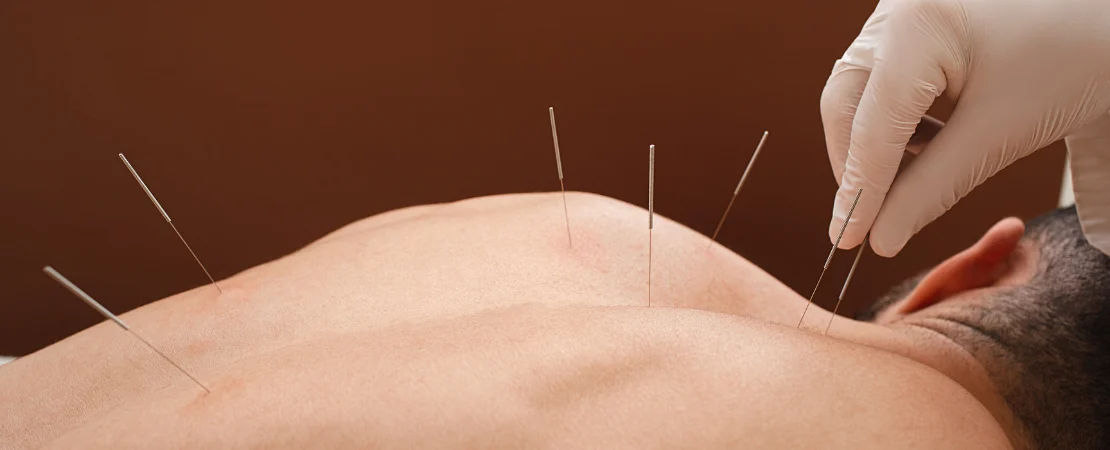
Acupuncture is far more than a tool for local pain relief. When applied with a neurophysiological framework, it engages the body’s own calming pathways — including the release of endogenous opioids and activation of the parasympathetic nervous system.
Clinical benefits may include:
- Reduced central sensitization and pain sensitivity
- Improved sleep quality, which is essential for nervous system recovery
- Promotion of deep physiological relaxation
- Modulation of the hypothalamic-pituitary-adrenal (HPA) stress axis
A 2022 review in Frontiers in Neuroscience highlighted acupuncture’s role in downregulating neuroinflammatory markers associated with central sensitization — supporting its use as part of an integrated pain neuroscience approach.
3. Dolphin Neurostim & Vagus Nerve Stimulation
The Dolphin Neurostim device delivers microcurrent electrical stimulation to targeted acupuncture and trigger points. Unlike conventional TENS units, it uses a specific direct current waveform that closely resembles the body’s own bioelectric signals.
This approach is applied to:
- Calm overactive pain signaling pathways
- Release chronic muscle guarding and fascial tension
- Stimulate the vagus nerve — the primary nerve of the parasympathetic (rest-and-digest) system
Vagal nerve stimulation is an area of significant clinical interest. Supporting vagal tone helps shift the autonomic nervous system away from sympathetic dominance and toward the healing, restorative parasympathetic state. Emerging research in Bioelectronic Medicine (2019–2023) continues to explore vagal stimulation as a non-pharmacological intervention for pain and systemic inflammation.
4. ONDAMED Biofeedback Therapy
The ONDAMED system uses pulsed electromagnetic field (PEMF) frequencies in combination with pulse biofeedback to identify areas of physiological stress and deliver targeted therapeutic frequencies.
In practice, this supports:
- Detection of regions of autonomic dysregulation or tissue stress
- Nervous system regulation through resonant electromagnetic stimulation
- A deep, measurable state of physiological relaxation
While large-scale randomized controlled trials on ONDAMED specifically are still developing, PEMF therapy more broadly has been studied for its effects on tissue repair, pain modulation, and anti-inflammatory activity, with a growing evidence base in musculoskeletal and neurological rehabilitation.
5. Manual Therapy & Therapeutic Breathing
Hands-on physiotherapy — including joint mobilization, soft tissue release, and fascial techniques — works on multiple levels simultaneously. Beyond addressing local restrictions, manual therapy has been shown to influence the autonomic nervous system, reduce cortisol levels, and activate the body’s natural pain-inhibitory mechanisms.
Paired with guided diaphragmatic breathing, this combination:
- Reduces protective muscle tension at a neurological level
- Improves circulation and lymphatic drainage
- Sends powerful safety signals directly to the nervous system
- Activates the vagal brake, calming systemic arousal
Breathing is one of the most underutilised and immediately effective tools in nervous system recovery — and it is something patients can practice independently between sessions.
You Are Not Broken — You Are Protected
Perhaps the most important shift we hope every patient experiences is this one:
Your pain is real. It is not “in your head.” But it does not necessarily mean your body is damaged.
In many cases of persistent pain, the body is doing exactly what it was designed to do — protecting you. The nervous system has simply not yet received the message that the danger has passed.
Our role as physiotherapists is not to dismiss your pain or push through it. It is to create conditions — clinical, educational, and therapeutic — where your system feels genuinely safe again. When that happens, healing follows naturally.
When Should You Consider This Approach?
This integrated, nervous-system-focused approach is particularly well suited for individuals who:
- Have experienced pain lasting more than 4–6 weeks without clear structural cause
- Notice stiffness, guarding, or fear associated with specific movements
- Find that pain returns repeatedly despite previous treatment
- Observe that stress, sleep deprivation, or emotional strain worsens their symptoms
- Have received a “normal” imaging result but continue to experience significant discomfort
A Note on Supporting Evidence
The clinical frameworks described in this article draw from established and emerging literature in pain neuroscience, including:
- Nijs J. et al. (2021). “Nociplastic Pain Criteria or Recognition of Central Sensitization? Pain Phenotyping in the Past, Present and Future.” Journal of Clinical Medicine.
- Vickers AJ. et al. (2018). “Acupuncture for Chronic Pain: Update of an Individual Patient Data Meta-Analysis.” Journal of Pain. (Ongoing citations through 2022 systematic reviews.)
- George SZ. et al. (2021). “Biopsychosocial Influence on Exercise-Induced Hypoalgesia.” Pain Medicine — supporting graded exposure as an evidence-based pain management strategy.
These references are provided for informational purposes. They do not constitute individual medical advice. Please consult a qualified healthcare professional for assessment and treatment guidance.
Final Thoughts
Pain is complex — but it is also remarkably adaptable.
The nervous system that learned to protect you through pain can, with the right guidance, learn that it is safe to let go. That process takes time, consistency, and a treatment approach that truly addresses the whole picture.
With an integrated, evidence-informed plan, we can help you retrain how your body responds, calm your nervous system, and restore the confident, pain-free movement you deserve.
Start Your Recovery Journey
Book an appointment today and experience a treatment philosophy that goes beyond symptom management — one grounded in how your body actually heals.
FAQs:
Pain memory, or central sensitization, occurs when the nervous system remains in a heightened alert state after an injury heals. It continues generating pain signals not because of ongoing damage, but because the system has learned to stay protective.
Yes. Research in pain neuroscience confirms that pain can be entirely real and yet neurologically driven, with no active structural damage present. This is called nociplastic pain and is increasingly recognized in clinical guidelines worldwide.
Physiotherapy uses graded movement, manual therapy, breathing techniques, and specialized tools to gradually signal safety to the nervous system. Over time, this reduces hypersensitivity, rebuilds movement confidence, and restores normal pain processing.
It varies depending on how long pain has been present and individual factors. Many patients notice meaningful improvement within 6–12 sessions. Chronic or complex cases may require a longer, phased approach with ongoing reassessment and home practice.
Yes. Multiple systematic reviews support acupuncture's role in reducing central sensitization, modulating pain pathways, and activating parasympathetic responses. It works best when integrated within a comprehensive physiotherapy plan rather than used in isolation.
The vagus nerve is the body's primary parasympathetic nerve, regulating the shift from stress to recovery. Stimulating vagal activity calms the nervous system, reduces inflammation, improves sleep, and creates the physiological conditions in which the body can genuinely heal.
Common signs include pain that persists beyond expected healing time, sensitivity to touch or movement, pain that worsens with stress, and normal imaging results despite significant discomfort. A registered physiotherapist can assess your pattern and guide you appropriately.
Absolutely. Psychological stress activates the same neurological pathways involved in pain processing. Elevated cortisol and sympathetic nervous system activity increase pain sensitivity. Addressing stress as part of your physiotherapy plan is not optional — it is clinically essential.

Ask Our Physiotherapist for More Information
Subscribe To Our Newsletter
Your health is our priority, and we’re committed to partnering with you to achieve your optimal wellness.