Physiocare Physiotherapy & Rehab Centre Ottawa
Now Open: Our 8th Location in
South Keys!
Updated on August 1, 2026

Written By
Prateeksha Viradiya
Resident Physiotherapist
Specializes in Aquatic Rehab and is a Certified Aquafit Instructor.
Specializes in Aquatic Rehab and is a Certified Aquafit Instructor.

✓ Clinically Reviewed By:
Gunjan Vermani
Director and Registered Physiotherapist
20+ Years Experience
Clinical Specialties:
Central pain management, Concussion rehabilitation
Post-Traumatic Vision Syndrome, Concussion, and How Physiotherapy Can Help
Concussions are often dismissed as a straightforward “head injury,” but their effects extend well beyond the familiar headaches and dizziness. One lesser-known yet deeply impactful consequence is Post-Traumatic Vision Syndrome (PTVS) — a condition that can quietly derail someone’s ability to work, study, drive, or simply move through daily life.
The encouraging news is that with the right clinical support, most people recover well. Physiotherapy plays a central role in assessing, managing, and guiding recovery from both concussion and PTVS — and understanding why starts with knowing what these conditions actually involve.
What Is a Concussion?
A concussion is classified as a mild traumatic brain injury (mTBI). It occurs when a blow to the head, face, neck, or body transmits enough force to the brain to temporarily disrupt normal function. Common causes include falls, motor vehicle accidents, sports collisions, and whiplash-type injuries.
Symptoms may appear within seconds or emerge over the following hours to days. They can affect multiple body systems simultaneously — neurological, vestibular (balance), cervical (neck), and visual. This multi-system nature is precisely why concussion management requires more than rest alone.
Clinical Note: According to the Ontario Neurotrauma Foundation’s Concussion Guidelines and a widely referenced 2020 study published in British Journal of Sports Medicine (Patricios et al.), early, active, individualized rehabilitation — rather than complete rest — produces superior outcomes in concussion recovery. This supports the physiotherapy-led approach outlined below.
What Is Post-Traumatic Vision Syndrome (PTVS)?
Post-Traumatic Vision Syndrome refers to a cluster of visual dysfunctions that emerge after a concussion or head injury. Even a seemingly mild trauma can disrupt the intricate communication between the eyes, brain, and nervous system.
This is important to understand: vision is a brain-driven process. Approximately 50% of the brain’s neural pathways are involved in visual processing. When the brain sustains an injury — even a mild one — visual control can be compromised even when the eyes themselves are structurally healthy. The problem isn’t in the eye; it’s in how the brain processes what the eye sees.
Common Visual Symptoms After Concussion
People living with PTVS often report a frustrating range of symptoms:
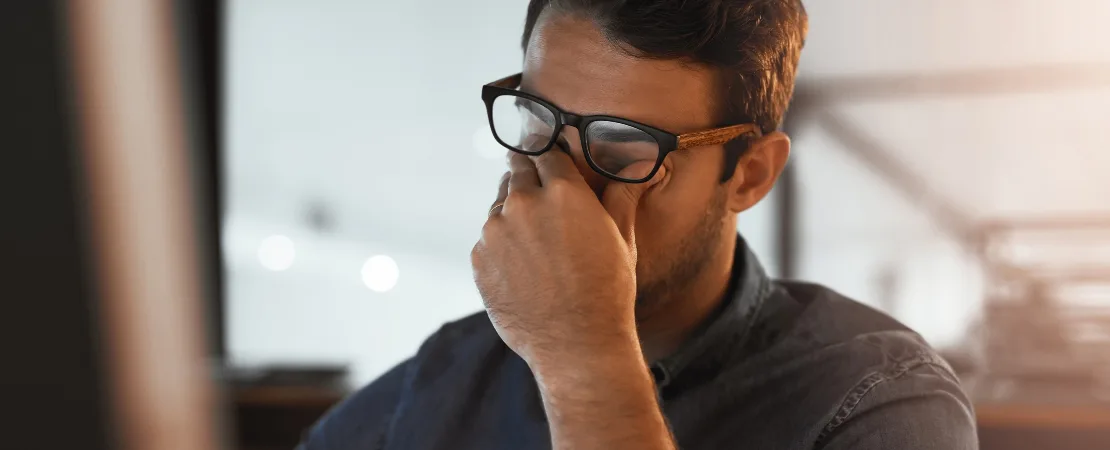
Blurred or double vision is among the most common, along with difficulty focusing — particularly on near tasks like reading or writing. Eye strain and fatigue set in quickly, and headaches are frequently triggered by screen use or sustained reading. Sensitivity to light and motion can make busy environments like grocery stores or traffic genuinely overwhelming. Difficulty tracking moving objects, problems with depth perception, and losing one’s place on a page are also frequently reported.
These symptoms tend to worsen with screen time, reading, fatigue, and visually stimulating environments — which unfortunately describes most people’s workdays and school days.
Why Visual Symptoms Are So Frequently Missed
This is where many patients encounter a frustrating gap in care. Standard eye exams are designed to assess visual acuity — how clearly you see. They are not designed to evaluate how efficiently and functionally your visual system operates.
As a result, someone can test at 20/20 and still struggle profoundly with everyday visual tasks. They may be told their eyes are “fine” despite persistent and debilitating symptoms. This is not a failure of the optometrist; it is simply a scope-of-practice distinction that highlights the importance of concussion-specific assessment.
This is precisely where a concussion-trained physiotherapist becomes essential to the care team.
The Role of Physiotherapy in Concussion and PTVS Recovery
Physiotherapy for concussion is not a one-symptom fix. A thorough clinical assessment addresses the entire system — visual, vestibular, cervical, and neurological — because these systems do not operate in isolation.
1. Visual System Assessment
A physiotherapist trained in concussion care evaluates how the eyes move and coordinate, including smooth pursuit tracking, saccadic (quick) eye movements, convergence and divergence (eye teaming), and the ability to sustain visual focus over time. Importantly, the clinician also documents how the visual system responds to provocation — because symptom behaviour under load is highly informative.
2. Vestibular System — Balance and Dizziness
The visual and vestibular systems are deeply interconnected. Dysfunction in either can produce dizziness, nausea, and unsteadiness. Physiotherapy works to retrain these two systems to operate in coordination again, which is often the key to resolving motion sensitivity and spatial disorientation.
3. Cervical Spine Involvement
Neck injuries frequently occur alongside concussions and are often an underappreciated driver of ongoing symptoms. Cervicogenic headaches, dizziness originating from the upper cervical spine, and referred visual disturbances are all well-documented. Treating the neck is not optional in many cases — it is essential for complete recovery.
4. Nervous System Regulation
After a concussion, the autonomic nervous system can remain in a prolonged state of heightened alertness, making the brain more reactive to stimuli. Physiotherapy uses graduated exposure — carefully increasing visual and physical demands over time — to reduce symptom sensitivity, improve tolerance, and restore confidence in daily activities.
Evidence note: A 2021 systematic review in the Journal of Neuroengineering and Rehabilitation (Schneider et al.) found that active rehabilitation addressing vestibular and visual deficits significantly reduced concussion recovery time compared to passive rest strategies. This reinforces the clinical rationale for early, structured physiotherapy intervention.
How Physiotherapy Treats Post-Traumatic Vision Syndrome
Treatment is always individualized, progressive, and symptom-guided. No two concussions present identically, and no two treatment plans should either. Depending on clinical findings, a program may include:
Eye movement exercises targeting tracking, focusing, and coordination; visual endurance training to build capacity for sustained near work; vestibulo-ocular reflex (VOR) exercises to restore gaze stability during head movement; balance and movement integration to address the whole sensorimotor system; and a graduated return-to-work, school, or sport protocol.
Education is woven throughout the entire process — helping patients understand how to pace activity, when to rest, how to interpret symptom fluctuations, and what realistic recovery looks like.
Every exercise is carefully dosed. The goal is always to challenge the system appropriately, never to overwhelm it.
When to Seek Help
Consider seeking physiotherapy assessment if you or your child experience any of the following: persistent symptoms beyond 7 to 14 days post-injury, headaches or dizziness triggered by reading or screen use, visual discomfort that is interfering with school, work, or daily function, a history of multiple concussions, or symptoms that worsen with activity rather than gradually improving.
Early intervention consistently leads to better outcomes. Waiting for symptoms to “just go away” often prolongs recovery unnecessarily.
Safety Note: The information in this article is intended for general educational purposes. If you or someone you know has sustained a head injury, please consult a licensed healthcare provider before beginning any rehabilitation program. This content does not replace individualized clinical assessment or medical advice.
A Collaborative, Team-Based Approach
Concussion recovery rarely happens in a single-discipline silo. At a leading physiotherapy clinic in Ottawa, concussion-trained physiotherapists typically work alongside neuro-optometrists, physicians, occupational therapists, and psychologists to ensure that every dimension of recovery is addressed — visual, physical, cognitive, and emotional.
This integrated model reflects current best practice in concussion care and is what patients deserve.
Final Thoughts
Post-Traumatic Vision Syndrome is real, it is common, and it is treatable. Visual symptoms following a concussion are not something to push through or dismiss. They are clinical signals that the brain’s visual processing networks need targeted support.
Physiotherapy in Ottawa offers a structured, evidence-informed pathway back to full function — addressing not just the visual system, but the vestibular, cervical, and neurological systems that are so often disrupted alongside it.
If concussion symptoms have been lingering longer than expected, the visual system may be the missing piece in your recovery. A proper concussion assessment can make all the difference.
FAQs:
PTVS affects how the brain processes visual information, not the eye's physical structure. Standard eye exams may show normal acuity while someone still struggles with tracking, focusing, and visual endurance due to brain-level disruption.
Recovery timelines vary based on injury severity, age, and how promptly treatment begins. Many patients see meaningful improvement within 6 to 12 weeks of active physiotherapy, though complex cases may require longer, multidisciplinary care.
Yes. Young people are particularly vulnerable because their developing nervous systems are more sensitive to concussive forces. Visual symptoms can significantly affect school performance, reading, and sports, making early assessment critically important for this age group.
Most people achieve full or near-full functional recovery with appropriate treatment. The brain demonstrates strong neuroplasticity, and targeted vision and vestibular exercises help rewire disrupted pathways, restoring visual comfort and performance over time.
Both are often beneficial. A concussion-trained physiotherapist addresses functional visual deficits and vestibular involvement, while a neuro-optometrist can prescribe therapeutic lenses or prisms if needed. A collaborative approach produces the best outcomes for complex cases.
Common exercises include smooth pursuit tracking, saccadic eye movement drills, convergence and divergence training, and vestibulo-ocular reflex (VOR) activities. All are individually dosed and progressed based on your symptom tolerance and clinical response.
Busy environments create intense visual and sensory demands. After concussion, the brain becomes less efficient at filtering and processing competing stimuli. This sensory overload triggers symptoms like dizziness, headache, and anxiety — all treatable through graduated physiotherapy exposure.
Evidence now supports early active rehabilitation rather than prolonged rest. Most clinical guidelines recommend beginning a structured assessment within the first one to two weeks post-injury, as early intervention is consistently associated with faster and more complete recovery.
Categories
About the Author

Prateeksha Viradiya
Certified in Pelvic Floor, Acupuncture, Certified ROST Therapist | RAPID Treatment Specialist at Physiocare Physiotherapy and Rehab Centre
View Full Bio
Ask Our Physiotherapist for More Information
Subscribe To Our Newsletter
Your health is our priority, and we’re committed to partnering with you to achieve your optimal wellness.