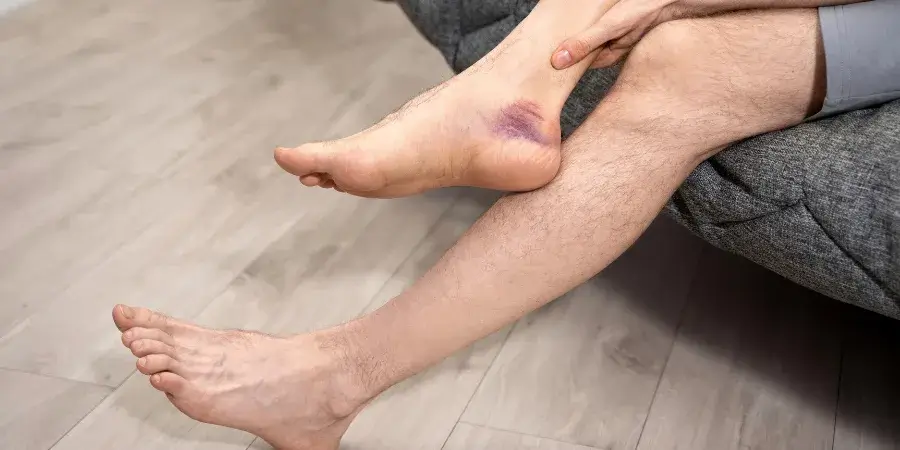
Understanding Ankle Impingement
What Is Ankle Impingement?
Ankle impingement occurs when soft tissue or bone structures become compressed within the ankle joint, typically during specific movements. This compression causes pain, inflammation, and restricted motion. The condition commonly develops at the front (anterior) or back (posterior) of the ankle, creating distinct pain patterns. Athletes, dancers, and active individuals experience this frequently, though anyone can develop impingement following injury or overuse.
Ankle Anatomy and Impingement Sites
Your ankle joint consists of the tibia, fibula, and talus bones, supported by ligaments, tendons, and a joint capsule. The anterior ankle contains the tibiotalar joint capsule and extensor tendons. The posterior ankle houses the flexor hallucis longus tendon and os trigonum bone. When tissues or bone spurs compress in these spaces during movement, impingement develops. Understanding this anatomy helps explain why certain movements trigger your pain.
Common Causes and Injury Mechanisms
- Repetitive dorsiflexion (upward ankle bending) in running or jumping causes anterior compression and inflammation
- Forced plantarflexion (pointing toes downward) in ballet or soccer creates posterior impingement
- Ankle sprains lead to scar tissue formation that fills joint spaces
- Chronic overuse stimulates bone spur development along joint margins
- Direct trauma damages soft tissues, creating swelling that reduces available joint space
Risk Factors for Ankle Impingement
Athletes in soccer, dance, gymnastics, and running face elevated impingement risk from repetitive ankle movements. Previous ankle sprains increase likelihood through scar tissue formation and altered joint mechanics. Individuals with naturally increased ankle flexibility or those performing frequent squatting and kneeling experience greater compression forces. Poor footwear support and sudden training intensity increases contribute to tissue irritation. Age-related bone spur development further narrows joint spaces.
Recognizing Ankle Impingement Symptoms
- Deep, aching pain at the front or back of your ankle during specific movements
- Sharp pinching sensation when pushing off, jumping, or pointing your toes
- Visible swelling around the ankle joint, particularly after activity
- Reduced ankle flexibility affecting your ability to squat, run, or walk on inclines
- Tenderness when pressing on specific ankle areas
- Difficulty walking on uneven surfaces or climbing stairs comfortably
Complications Without Treatment
Untreated impingement progresses to chronic inflammation and persistent pain that limits daily activities. Joint cartilage deteriorates from ongoing compression, potentially leading to early-onset arthritis. Compensatory movement patterns develop, creating secondary problems in your knee, hip, or opposite ankle. Complete loss of certain ankle movements may occur as scar tissue accumulates.
Treatment at Physiocare for Ankle Impingement
Evidence-Based Therapies Available
Maitland Mobilizations
- Gentle, graded joint movements restore normal ankle mechanics by reducing joint stiffness
- Specific oscillation techniques target restricted joint capsule areas causing impingement
- Progressive intensity application ensures comfort while maximizing mobility gains
- Particularly effective for addressing movement restrictions following ankle sprains
Mulligan Mobilizations
- Combines sustained joint glides with active ankle movement to immediately reduce pain
- “Movement with mobilization” approach retrains proper joint tracking patterns
- Patients often experience instant pain relief during treatment sessions
- Addresses positional faults contributing to tissue compression
Myofascial Release
- Targeted soft tissue work releases tight calf muscles and ankle ligaments contributing to compression
- Manual pressure techniques restore tissue flexibility and reduce inflammation
- Improves blood flow to healing tissues while breaking down restrictive scar tissue
- Creates space within the joint by addressing surrounding muscle tightness
- Penetrating light energy accelerates cellular healing in damaged ankle tissues
- Reduces inflammation and pain through enhanced mitochondrial activity
- Non-invasive treatment promotes collagen production for tissue repair
- Particularly effective for chronic impingement cases with persistent inflammation
TENS (Transcutaneous Electrical Nerve Stimulation)
- Electrical impulses block pain signals from reaching your brain
- Provides immediate pain relief enabling participation in therapeutic exercises
- Stimulates natural endorphin release for lasting pain management
- Adjustable settings ensure comfortable treatment customized to your sensitivity
IFC (Interferential Current Therapy)
- Deep-penetrating electrical currents reduce inflammation at the joint level
- Increases local blood circulation bringing healing nutrients to damaged areas
- Effective for managing acute pain episodes and chronic discomfort
- Comfortable treatment that patients describe as a gentle tingling sensation
- High-energy acoustic waves break down scar tissue and bone spurs
- Stimulates regeneration of damaged soft tissues and cartilage
- Particularly effective for chronic impingement resistant to conservative treatment
- Accelerates healing timelines by enhancing cellular metabolism
- Electrostatic vibrations create gentle tissue oscillation reducing pain and swelling
- Penetrates deep into ankle joint structures without causing discomfort
- Activates lymphatic drainage to remove inflammatory byproducts
- Ideal for sensitive patients who cannot tolerate hands-on pressure
- Advanced magnetic field technology stimulates cellular regeneration at the molecular level
- Particularly effective for cartilage healing and bone-related impingement
- Non-invasive treatment with no reported side effects
- Complements other therapies by enhancing overall tissue healing capacity
How Physiotherapy Resolves Ankle Impingement
Physiotherapy addresses both symptoms and underlying causes of your ankle impingement. Our therapists reduce pain and inflammation through targeted modalities, then restore normal joint mechanics with mobilization techniques. Customized exercise programs strengthen supporting muscles, improve ankle stability, and prevent recurrence. Education on movement modifications helps you avoid aggravating positions while tissues heal.
Your Journey to Recovery
- Comprehensive Assessment – Our physiotherapists evaluate your ankle mobility, identify impingement locations, assess movement quality, and understand your activity goals.
- Personalized Treatment Plan – We design your custom program combining appropriate manual therapies, advanced modalities, progressive exercises, and realistic recovery timelines.
- Evidence-Based Treatment Delivery – You receive hands-on care using proven techniques, supported by state-of-the-art equipment, delivered by experienced therapists committed to your progress.
- Recovery and Prevention Strategy – We guide your return to activities, teach injury prevention techniques, provide home exercise programs, and ensure long-term ankle health.
Location-Specific Treatment Options
Why Choose Physiocare for Ankle Impingement?
Our physiotherapists hold advanced certifications in manual therapy and orthopedic rehabilitation, bringing specialized expertise to your ankle care. We invest in cutting-edge technologies like EMTT and Shockwave Therapy that accelerate your recovery beyond traditional approaches.
Every treatment plan reflects your unique injury pattern, activity goals, and healing timeline. As a trusted, we offer convenient locations across the city, flexible scheduling, and a compassionate team dedicated to restoring your pain-free movement.
Frequently Asked Questions About Ankle Impingement
Our Professional Team at Physiocare
Healing Hands, Happy Hearts: What Our Patients Say
Citations and References
- Molloy, S., Solan, M. C., & Bendall, S. P. (2003). "Synovial impingement in the ankle: A new physical sign." The Journal of Bone and Joint Surgery. British Volume, 85(3), 330-333.
- Donovan, A., & Rosenberg, Z. S. (2010). "Extraarticular lateral hindfoot impingement with posterior tibial tendon tear: MRI correlation." American Journal of Roentgenology, 195(5), 1145-1155.
- Mayo Clinic. (2024). "Ankle impingement: Symptoms and causes." Mayo Clinic Patient Care & Health Information.
- Robinson, P., & White, L. M. (2002). "Soft-tissue and osseous impingement syndromes of the ankle: Role of imaging in diagnosis and management." Radiographics, 22(6), 1457-1469.
- Physiopedia. (2024). "Ankle impingement syndrome." Physiopedia Evidence-Based Physiotherapy Resources.