Understanding Amputee & Prosthetic Rehabilitation
What Is Amputee Rehabilitation?
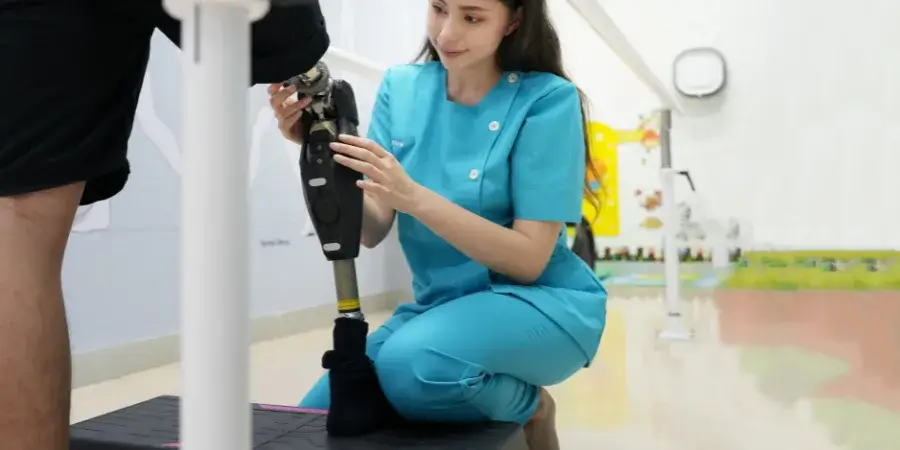
Amputee rehabilitation is a specialized physiotherapy program designed to help individuals regain independence, mobility, and quality of life following limb amputation. This comprehensive approach addresses physical recovery, prosthetic adaptation, pain management, and psychological adjustment.
The rehabilitation process focuses on strengthening residual limbs, improving balance and coordination, mastering prosthetic use, and preventing secondary complications. Each program is tailored to the individual’s amputation level, functional goals, and lifestyle needs.
Relevant Anatomy and Biomechanics
Understanding the anatomical changes after amputation helps guide effective rehabilitation:
Residual Limb Structure: The remaining portion of the amputated limb includes bone, muscle, nerves, blood vessels, and skin that must adapt to new mechanical demands and prosthetic interface pressures.
Compensatory Movement Patterns: The body naturally adjusts posture and gait to accommodate limb loss, often creating asymmetrical loading patterns that affect the spine, pelvis, and remaining limbs.
Neuromuscular Adaptation: The nervous system must reorganize motor control patterns, balance strategies, and sensory processing to function effectively with altered biomechanics and prosthetic integration.
Causes and Types of Amputation
Traumatic Amputation: Results from accidents, workplace injuries, or motor vehicle collisions requiring immediate surgical intervention and subsequent rehabilitation planning.
Vascular Disease: Diabetes, peripheral arterial disease, or severe circulation problems may necessitate amputation when tissue viability cannot be restored through medical management.
Cancer Treatment: Bone or soft tissue tumors sometimes require amputation as part of oncological treatment, followed by specialized rehabilitation protocols.
Congenital Limb Deficiency: Individuals born with limb differences may benefit from prosthetic fitting and rehabilitation to optimize functional independence throughout developmental stages.
Risk Factors for Complications
Poor Prosthetic Fit: Ill-fitting prosthetics create pressure points, skin breakdown, blisters, and pain that limit wearing tolerance and functional mobility outcomes.
Muscle Imbalances: Weakness in core, hip, or remaining limb muscles compromises balance, gait efficiency, and increases fall risk during prosthetic training.
Cardiovascular Deconditioning: Reduced activity levels post-amputation can lead to decreased endurance, making daily activities and rehabilitation exercises more challenging.
Psychological Factors: Depression, anxiety, or inadequate coping strategies may slow physical recovery, reduce motivation, and impact overall rehabilitation success.
Common Symptoms and Challenges
Phantom Limb Sensations: Many amputees experience feelings that the missing limb is still present, including itching, pressure, or movement sensations that can be disconcerting.
Phantom Limb Pain: Painful sensations perceived in the absent limb affect 60-80% of amputees and can significantly impact quality of life and rehabilitation progress.
Residual Limb Pain: Discomfort in the remaining limb tissue may result from surgical healing, nerve involvement, or prosthetic pressure during weight-bearing activities.
Balance Difficulties: Altered center of gravity and loss of sensory feedback create instability during standing, walking, and transitions that require retraining and compensatory strategies.
Gait Abnormalities: Asymmetrical walking patterns, reduced speed, and increased energy expenditure are common until proper prosthetic fitting and neuromuscular retraining occur.
Complications If Untreated
- Chronic pain syndromes including persistent phantom limb pain and neuromas
- Permanent gait deviations leading to secondary musculoskeletal injuries
- Skin breakdown, infections, or contractures limiting prosthetic use
- Decreased independence and increased fall risk affecting quality of life
Treatment at Physiocare for Amputee & Prosthetic Rehabilitation
Our comprehensive amputee rehabilitation program combines evidence-based manual therapies, advanced electrotherapeutic modalities, and specialized neuromuscular retraining to restore confident mobility and independence.
Treatments We Offer
Gait Training
Specialized walking retraining that teaches proper prosthetic use, weight transfer, and balance strategies. Progressive exercises advance from parallel bars to community ambulation, addressing speed, endurance, stairs, and uneven terrain for real-world confidence.
DNS (Dynamic Neuromuscular Stabilization)
This developmental approach restores optimal core stability and movement patterns disrupted by amputation. By retraining fundamental stabilization strategies, DNS therapy improves balance, reduces compensatory patterns, and enhances prosthetic control during functional activities.
Red Cord Therapy (Neurac)
Suspension-based neuromuscular training that challenges stability and strength in gravity-reduced environments. Neurac therapy helps rebuild coordination between residual limb, core, and remaining limb muscles, improving functional movement quality and reducing fall risk.
Myofascial Release
Gentle soft tissue techniques addressing fascial restrictions, scar tissue adhesions, and muscle tension in the residual limb and compensating body regions. This hands-on approach reduces pain, improves tissue mobility, and enhances prosthetic socket comfort.
Craniosacral Therapy
Subtle manual therapy promotes nervous system regulation and pain modulation, particularly beneficial for phantom limb pain management. This gentle approach supports overall healing, reduces stress responses, and improves body awareness during rehabilitation.
Laser Therapy
Low-level laser therapy accelerates tissue healing, reduces inflammation, and provides pain relief for residual limb discomfort. Photobiomodulation promotes cellular repair, improves circulation, and addresses nerve pain associated with amputation.
TENS (Transcutaneous Electrical Nerve Stimulation)
Electrical nerve stimulation that provides non-invasive pain relief for both residual limb and phantom pain. TENS therapy modulates pain signals, reduces medication dependence, and can be used throughout the day for symptom management.
IFC (Interferential Current Therapy)
Deep-penetrating electrical stimulation that reduces pain, decreases swelling, and promotes healing in deeper tissues. IFC therapy is particularly effective for managing post-surgical inflammation and chronic residual limb discomfort.
DOT (Deep Oscillation Therapy)
Advanced electromechanical therapy creates gentle tissue oscillations that reduce edema, improve lymphatic drainage, and accelerate healing. Deep Oscillation Therapy is especially beneficial for managing residual limb swelling and preparing tissue for prosthetic fitting.
Our Step-by-Step Approach
Assessment: Comprehensive evaluation of residual limb condition, strength, balance, prosthetic fit, pain levels, and functional goals to establish baseline capabilities.
Personalized Plan: Individualized treatment program designed around your amputation level, prosthetic status, healing timeline, and specific mobility objectives.
Evidence-Based Treatment: Integration of manual therapy, therapeutic exercise, electrotherapy modalities, and gait training based on current amputee rehabilitation research.
Recovery & Prevention: Progressive return to desired activities with strategies to prevent secondary complications, optimize prosthetic use, and maintain long-term functional independence.
Location-Specific Amputee Rehabilitation Services
Why Choose Physiocare for Amputee Rehabilitation?
Our team brings advanced certifications in neuromuscular rehabilitation, manual therapy, and specialized prosthetic training protocols. We understand that recovery extends beyond physical healing to include emotional adjustment and lifestyle adaptation.
As a trusted physiotherapy clinic in Ottawa, we offer patient-centered care that respects your unique journey, celebrates progress milestones, and adjusts treatment as your needs evolve. With six convenient locations across Ottawa, accessing specialized amputee rehabilitation has never been easier.
Frequently Asked Questions
Our Professional Team at Physiocare
Healing Hands, Happy Hearts: What Our Patients Say
Citations and References
- Ephraim PL, Wegener ST, MacKenzie EJ, et al. Phantom pain, residual limb pain, and back pain in amputees: results of a national survey. Archives of Physical Medicine and Rehabilitation. 2005;86(10):1910-1919. [PubMed: 16213230]
- Webster JB, Levy CE, Bryant PR, Prusakowski PE. Sports and recreation for persons with limb deficiency. Archives of Physical Medicine and Rehabilitation. 2001;82(3 Suppl 1):S38-44. doi:10.1053/apmr.2001.26769
- Gailey R, Allen K, Castles J, et al. Review of secondary physical conditions associated with lower-limb amputation and long-term prosthesis use. Journal of Rehabilitation Research and Development. 2008;45(1):15-29. [PubMed: 18566923]
- Ülger Ö, Topuz S, Bayramlar K, et al. Effectiveness of phantom exercises for phantom limb pain: a pilot study. Journal of Rehabilitation Medicine. 2009;41(7):582-584. doi:10.2340/16501977-0380
- Chin T, Sawamura S, Shiba R, et al. Effect of an intelligent prosthesis (IP) on the walking ability of young transfemoral amputees. American Journal of Physical Medicine & Rehabilitation. 2003;82(6):447-451. doi:10.1097/01.PHM.0000069192.32417.89
- Physiopedia. Lower Limb Amputation Physiotherapy Management. Accessed November 2025. Available at: https://www.physio-pedia.com/Lower_Limb_Amputation
- Canadian Physiotherapy Association. Clinical Practice Guidelines: Amputee Rehabilitation. 2024 Update. Available at: https://physiotherapy.ca