Physiocare Physiotherapy & Rehab Centre Ottawa
Now Open: Our 8th Location in
South Keys!
Medial Collateral Ligament (MCL/UCL) Elbow Sprain: A Physiotherapist’s Guide
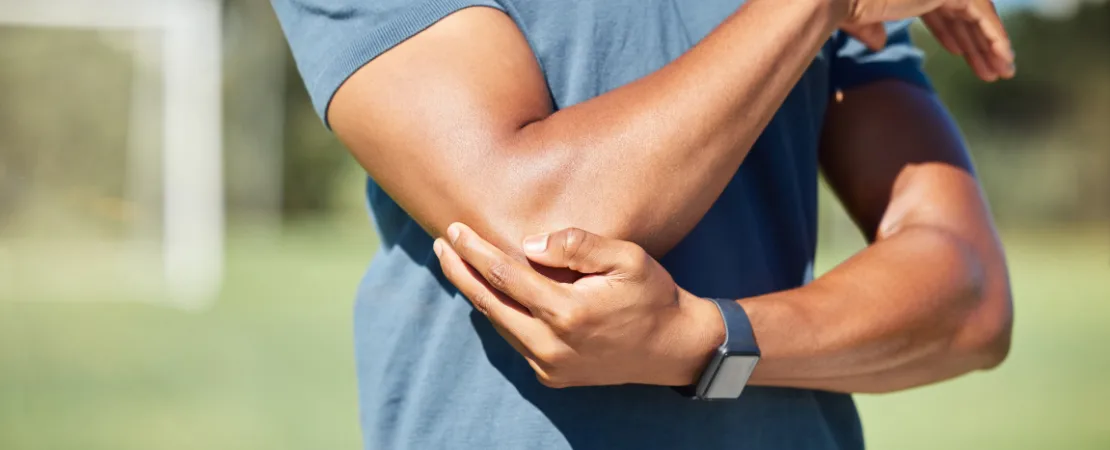
A medial collateral ligament (MCL) sprain—also called an ulnar collateral ligament (UCL) sprain—causes pain along the inside of the elbow. Many people first notice it during seemingly ordinary tasks: lifting groceries, gripping a doorhandle, throwing a ball, or simply pushing themselves up from a chair.
This ligament plays a crucial role in keeping the elbow stable during these everyday demands. When it becomes irritated or injured, the elbow can feel sore, weak, or subtly unreliable. Left unaddressed, the pain tends to linger and becomes progressively harder to settle—making early assessment worthwhile.
What Causes an MCL Sprain?
The medial collateral ligament runs along the inner side of the elbow and resists the valgus (inward bending) stress placed on the joint during gripping, lifting, and overhead movements.
An MCL sprain can develop gradually from repeated strain, or more suddenly following an overload event. Common causes include:
- Repetitive lifting or gripping at work or in training
- Throwing sports or overhead athletic activity
- A fall onto an outstretched hand
- A sudden, unexpected force through the arm
- Returning to activity too quickly after a previous elbow injury
Contributing factors matter too. Poor shoulder or upper-back strength, weak forearm muscles, or faulty movement technique can all increase the cumulative load through the elbow—making sprains more likely and recovery slower if they’re not addressed.
Clinical note: Research supports a biomechanical link between proximal (shoulder and scapular) muscle weakness and elevated medial elbow stress, particularly in throwing athletes. Addressing the whole kinetic chain—not just the elbow—is an important part of modern rehabilitation.
Common Symptoms
Everyone’s experience differs slightly, but the most frequently reported symptoms include:
- Pain or point tenderness along the inside of the elbow
- Pain when gripping, lifting, or throwing
- Discomfort when bending or fully straightening the arm
- A feeling of weakness or instability at the elbow
- Pain during weight-bearing tasks—pushing up from a chair, pressing, or holding a plank position
Characteristically, the pain builds gradually and worsens whenever the elbow is repeatedly pushed through aggravating movements without adequate recovery.
How Physiotherapy Can Help
Physiotherapy doesn’t simply aim to reduce pain in the short term—it identifies why the problem developed and supports a safe, confident return to normal activity.
Settling Pain and Protecting the Elbow
Early-stage treatment focuses on calming the irritated ligament and creating the conditions for healing. This may include:
- Guidance on modifying work tasks, sport, and daily activities to reduce load
- Ice or heat application, tailored to your specific symptoms
- Pain-relief modalities such as TENS, therapeutic ultrasound, low-level laser therapy (LLLT), or interferential current (IFC)
Bracing — When It’s Useful
An elbow brace or supportive strap is sometimes beneficial in the early phase. It can reduce strain through the ligament, make daily tasks more comfortable, improve confidence using the arm, and provide a degree of protection while the tissue settles. Your physiotherapist will guide you on whether a brace suits your situation—and, importantly, how to phase it out gradually as your strength and control improve.
Hands-On Treatment
Manual therapy techniques help restore movement and ease stiffness around the elbow joint. Depending on your presentation, this may include soft tissue work for tight forearm, arm, or shoulder muscles; gentle joint mobilisation to improve elbow and wrist range of motion; and Mulligan mobilisation—a technique that combines a sustained joint glide with active movement and frequently provides immediate, meaningful pain relief.
Exercise and Strengthening
As symptoms settle, progressive strengthening becomes central to recovery. A well-designed program typically includes forearm and grip exercises to offload the ligament, control and stability work at the elbow, and shoulder and upper-back strengthening to better support the arm as a whole. Your program will be individually tailored to your goals and progressed at a pace that allows the ligament to heal properly—neither too slow nor too fast.
Do I Need to Completely Rest the Elbow?
Generally, no. Complete rest can actually impede recovery. Ligaments respond best to guided, controlled loading—not prolonged immobilisation. Current evidence supports early, supervised mobilisation for soft tissue injuries, as it promotes organised collagen remodelling and prevents unnecessary deconditioning. Your physiotherapist will help you remain active while carefully avoiding movements that overload the healing tissue.
Will an MCL Sprain Get Better?
Yes—and the prognosis is genuinely good. The vast majority of medial collateral ligament sprains recover very well with the right approach. With appropriate physiotherapy, pain gradually settles, strength and stability improve, daily activities and sport feel progressively easier, and most people return to full function without ongoing problems.
Getting the elbow properly assessed early typically leads to a smoother and faster recovery. If you’re managing pain on the inside of your elbow, a physiotherapist can determine exactly what’s going on and guide you back to comfortable, confident movement.
If you’re based locally, visiting a physiotherapy clinic in Ottawa means you’ll have access to qualified clinicians who can assess your elbow thoroughly and design a rehabilitation plan suited to your specific needs and lifestyle.
Supporting Evidence
The recommendations in this article are informed by current clinical practice and supported by the following evidence:
- Erickson BJ, et al. (2020). “Ulnar collateral ligament reconstruction: indications, techniques, and outcomes.” JBJS Reviews. — Provides clinical context on UCL/MCL injury mechanisms and conservative management outcomes.
- Wilk KE, et al. (2021). “Current concepts in the rehabilitation of the overhead throwing athlete.” Journal of Orthopaedic & Sports Physical Therapy. — Supports kinetic chain assessment and proximal strengthening as components of elbow rehabilitation.
- Bleakley CM, et al. (2021). “Early mobilisation versus rest after soft tissue injury.” British Journal of Sports Medicine. — Supports guided early movement over complete rest for soft tissue recovery.
Safety Note: This article is written for general educational purposes and does not replace professional medical advice. If you are experiencing elbow pain, please consult a registered physiotherapist or your physician for an individual assessment before beginning any exercise or treatment program.
FAQs:
Most mild to moderate MCL elbow sprains recover within 4 to 8 weeks with appropriate physiotherapy. More significant sprains may take 3 to 6 months. Early assessment and guided rehabilitation generally lead to faster, more complete recovery outcomes.
In most cases, yes—with modifications. Your physiotherapist can advise on adjusting grip-heavy or lifting tasks to reduce stress on the ligament. Completely stopping work is rarely necessary, and staying active in a modified way often supports better recovery.
Yes. In the elbow, the medial collateral ligament (MCL) and ulnar collateral ligament (UCL) refer to the same structure. The terms are used interchangeably in clinical settings, though UCL is more common in sports medicine contexts, particularly with throwing athletes.
Not always. A skilled physiotherapist can assess the injury clinically through specific tests and movement analysis. Imaging such as MRI or ultrasound may be recommended if symptoms are severe, recovery is slow, or if a more significant structural injury is suspected.
Both can help depending on the stage. Ice is typically useful in the first 48–72 hours to manage acute pain and swelling. Heat may be more appropriate later to ease stiffness and improve tissue mobility. Your physiotherapist can advise based on your specific symptoms.
Yes, to a meaningful degree. Strengthening the forearm, shoulder, and upper back, using proper technique during sport or lifting, and progressing training loads gradually all reduce elbow stress. A physiotherapist can identify personal risk factors and recommend a targeted prevention program.
Effective exercises typically include wrist flexor and forearm strengthening, grip exercises, elbow stability drills, and shoulder rotator cuff work. Exercises should be introduced gradually and under physiotherapy guidance to avoid aggravating the healing ligament during early recovery stages.
You should seek assessment if pain persists beyond a week, worsens with activity, or significantly limits daily function. Early intervention from a qualified physiotherapist helps confirm the diagnosis, rule out more serious injuries, and start an evidence-informed rehabilitation plan promptly.

Ask Our Physiotherapist for More Information
Subscribe To Our Newsletter
Your health is our priority, and we’re committed to partnering with you to achieve your optimal wellness.