Physiocare Physiotherapy & Rehab Centre Ottawa
Now Open: Our 8th Location in
South Keys!
Updated on November 23, 2026

Written By
Prateeksha Viradiya
Resident Physiotherapist
Specializes in Aquatic Rehab and is a Certified Aquafit Instructor.
Specializes in Aquatic Rehab and is a Certified Aquafit Instructor.

✓ Clinically Reviewed By:
Gunjan Vermani
Director and Registered Physiotherapist
20+ Years Experience
Clinical Specialties:
Central pain management, Concussion rehabilitation
That Deep Shoulder Pain That Just Won’t Go Away? It Might Be a SLAP Lesion
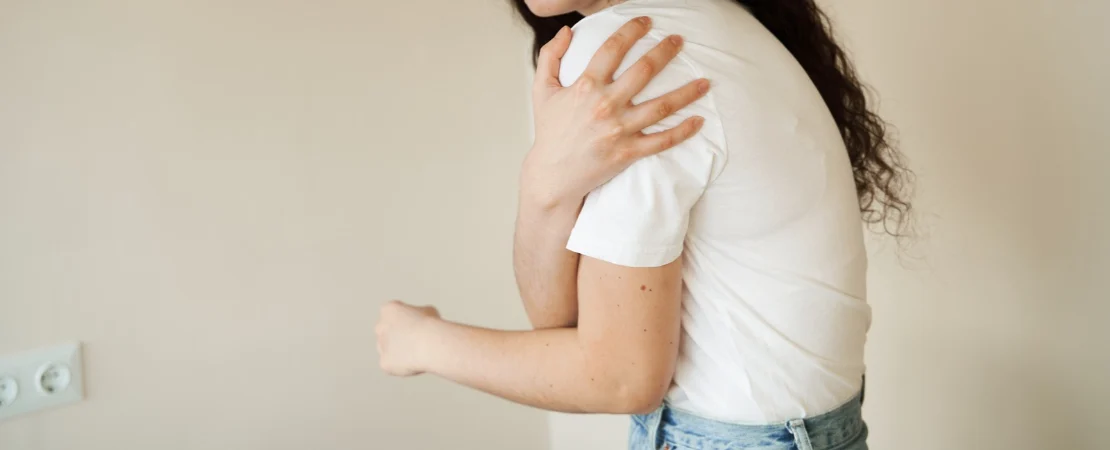
Ever feel a deep, hard-to-pinpoint pain inside your shoulder?
Not quite in the front… not exactly on the outside… just somewhere deep — especially when you lift, throw, or reach overhead?
Maybe there’s a click. Maybe your strength feels off. Or maybe your shoulder just doesn’t feel as “smooth” as it used to.
That could be a SLAP lesion. Let’s break it down in a way that actually makes sense.
So, What Is a SLAP Lesion?
A SLAP lesion is a specific type of injury to the labrum — the cartilage ring that helps stabilize your shoulder joint.
SLAP stands for: Superior Labrum Anterior to Posterior.
In simple terms: it’s a tear at the top part of the labrum, exactly where the biceps tendon attaches.
Think of it like this — your shoulder socket has a soft rim (the labrum) that deepens and stabilizes it. A SLAP lesion means damage right at the top of that rim, where a lot of mechanical stress gets transferred during overhead and pulling movements.
Clinical note: As a physiotherapist, one thing I tell patients often surprises them — SLAP tears remain genuinely difficult to diagnose on clinical exam and imaging alone. Even experienced clinicians rely on a cluster of findings (history, movement testing, and sometimes imaging) rather than any single “magic test,” which is exactly why a thorough assessment matters before jumping to conclusions.
Quick Shoulder Insight (Keeping It Simple)
Your shoulder is built for movement — which also makes it vulnerable. Key players here:
- The labrum — the stability ring
- The biceps tendon — attaches at the top of the labrum
- The rotator cuff — your shoulder’s dynamic stabilizers
Because the biceps tendon connects directly to the top of the labrum, pulling, lifting, or throwing places repeated stress on this exact area.
How Does a SLAP Tear Happen?
This injury can be sudden — or it can build up gradually over time.
Common causes:
- Repetitive overhead activity (gym training, throwing sports)
- Heavy lifting (especially overhead or pulling movements)
- A fall onto an outstretched arm
- Sudden traction (like catching a heavy falling object)
- Shoulder dislocation
Very common in:
- Athletes, especially throwing sports
- Gym-goers doing heavy overhead or pulling work
- People with repetitive overhead occupations
What Does It Feel Like?
This is where SLAP lesions can be tricky — they’re not always obvious. You might notice:
- Deep shoulder pain that’s hard to pinpoint
- Clicking, catching, or grinding sensations
- Pain with overhead or rotational movements
- Weakness during lifting or pulling
- Reduced performance, especially in sport
A key clue: it often feels deep inside the shoulder, not just on the surface.
Why People Often Miss It
Unlike many other shoulder injuries:
- It’s not always painful at rest
- Strength may feel “off” more than it feels painful
- Symptoms can come and go
Many people end up training through it — until it starts genuinely limiting performance.
What’s Happening Inside?
When a SLAP lesion occurs:
- The top part of the labrum becomes frayed or torn
- The biceps anchor becomes less stable
- Shoulder mechanics get disrupted
- Load gets distributed poorly across the joint
The result: pain, clicking, and reduced efficiency during movement.
Why You Shouldn’t Ignore It
If left untreated:
- Pain can become persistent
- Strength and performance drop
- Other shoulder structures get overloaded compensating
- The injury may worsen over time
The earlier you address it, the better the long-term outcome tends to be.
How We Treat SLAP Lesions at Physiocare
Our focus is simple: reduce irritation, restore control, and rebuild a strong, stable shoulder. As a leading physiotherapy clinic in Ottawa, here’s how our team approaches it:
Manual Therapy (Hands-On Treatment)
- Improves joint mechanics
- Reduces stiffness and discomfort
- Helps restore smoother shoulder movement
Myofascial Release
- Targets tight muscles in the chest, shoulder, and upper back
- Reduces tension affecting shoulder mechanics
- Improves overall movement quality
Controlled Mobility Exercises
- Restore safe range of motion
- Prevent stiffness without overloading the labrum
- Focus on controlled, pain-free movement
Postural Correction & Ergonomics
- Improves shoulder positioning
- Reduces stress on the labrum and biceps anchor
- Helps prevent repeated irritation
Modalities for Pain Relief & Recovery Support
We often combine rehab with supportive therapies:
- Cupping Therapy — improves blood flow, reduces muscle tightness, relieves surrounding tension
- Laser Therapy — promotes deeper tissue healing, reduces pain, supports recovery of irritated structures
- TENS (Electrical Pain Relief) — helps manage pain early, reduces discomfort during movement, makes rehab more comfortable
- IFC (Interferential Current Therapy) — targets deeper tissues, helps reduce inflammation, improves circulation
- Shockwave Therapy — useful in chronic or stubborn symptoms, stimulates a healing response, improves tissue quality
- DOT (Deep Oscillation Therapy) — gentle and effective early on, reduces swelling and irritation, supports natural healing
- EMTT (Advanced Healing Technology) — promotes cellular-level recovery, helps reduce pain and inflammation, useful in slower-healing cases
These treatments help create the right environment for healing — but targeted strengthening is what truly fixes the underlying problem.
Progressive Strengthening & Control
- Strengthens the rotator cuff
- Improves scapular (shoulder blade) control
- Gradually loads the biceps tendon safely
- Restores strength without aggravating the labrum
Clinical guidance consistently points to scapular control and rotator cuff conditioning as central pillars of non-surgical SLAP rehab — this isn’t just a Physiocare preference, it’s where the evidence and clinical reasoning converge.
Education & Self-Management
- Modify aggravating movements
- Learn safe training techniques
- Simple home exercise guidance
- Support for returning to sport or gym training
Every shoulder is different — your treatment plan is always customized to your specific presentation, goals, and activity level.
When Is Surgery Needed?
Not all SLAP lesions require surgery. It may be considered if:
- Symptoms don’t improve with a genuine trial of rehab
- You’re a high-level overhead athlete with persistent dysfunction
- There’s significant structural damage
The good news: many people recover well with conservative treatment alone, particularly when they’re able to complete a full rehabilitation program before attempting return to sport.
Quick Reality Check: Healing Timeline
- Mild cases: 6–8 weeks
- Moderate cases: 8–12+ weeks
- Post-surgery: 4–6 months
It takes patience — but progress is very achievable with consistent, guided rehab.
What Helps (And What Slows You Down)
✅ Helps:
- Smart, progressive strengthening
- Good movement mechanics
- Consistency with your program
- Listening to your symptoms
❌ Slows recovery:
- Training through pain
- Ignoring clicking or instability
- Returning to activity too quickly
- Resting alone without active rehab
Final Thought
SLAP lesions can be frustrating — especially because they’re not always obvious. But here’s the important part: your shoulder isn’t “done,” it just needs the right kind of rehab.
With the right approach, you can reduce pain, restore strength, and get back to doing what you enjoy. Don’t just wait for your shoulder to settle — build it back stronger with proper guidance from a qualified physiotherapy team.
A Note on Evidence
Recent research supports much of the clinical approach described above:
- A systematic review in the Journal of Shoulder and Elbow Surgery found that athletes who completed a full nonoperative rehabilitation program for SLAP tears had a 78% return-to-play rate, compared to just 53.7% among all athletes overall, with return to prior performance rising from roughly 43% to 72% in those who completed their rehab. ScienceDirectScienceDirect
- A case series published in a peer-reviewed orthopaedic sports medicine journal reported that successful nonoperative treatment of SLAP tears led to significant improvements in pain, function, and quality of life, with all patients in that group returning to sport. PubMed
- According to a clinical reference summarizing current orthopaedic literature, nonoperative physical therapy for SLAP lesions focuses on correcting scapular dyskinesia and glenohumeral internal rotation deficit, and several reports on high-level throwing athletes have shown comparable return-to-play outcomes between surgical and nonoperative management. NCBI
Professional Safety Note: This content is for general educational purposes and does not replace individualized medical assessment. Shoulder pain has many possible causes, and SLAP lesions can be difficult to diagnose without a thorough physical examination — and sometimes imaging — by a qualified healthcare professional. If you’re experiencing persistent shoulder pain, clicking, or weakness, please consult a licensed physiotherapist or physician for proper diagnosis before starting any treatment program.
FAQs:
A SLAP lesion is a tear at the top of the labrum, where the biceps tendon attaches. It stands for Superior Labrum Anterior to Posterior and often causes deep, hard-to-pinpoint shoulder pain during overhead movement.
Yes, many SLAP tears respond well to structured physiotherapy. Conservative treatment focuses on reducing irritation, correcting movement mechanics, and progressively strengthening the rotator cuff and scapular stabilizers before surgery is considered.
Common signs include deep internal shoulder pain, clicking or catching, weakness with lifting, and discomfort during overhead or rotational movement. A proper diagnosis requires hands-on assessment by a physiotherapist or physician.
Mild cases often improve within 6–8 weeks, moderate cases take 8–12+ weeks, and post-surgical recovery typically takes 4–6 months. Timelines vary based on severity, consistency with rehab, and individual healing response.
SLAP tears commonly result from repetitive overhead activity, heavy lifting, throwing sports, falls onto an outstretched arm, sudden traction injuries, or shoulder dislocation. Gym-goers and overhead athletes are particularly susceptible to this injury.
Training through pain or ignoring clicking and instability can worsen the injury and overload surrounding structures. It's best to modify aggravating movements and follow a guided rehab program rather than pushing through symptoms.
Treatment often combines manual therapy, myofascial release, controlled mobility work, and modalities like laser, shockwave, or TENS therapy, paired with progressive strengthening to restore stability and function safely.
Surgery may be considered if symptoms don't improve after a genuine rehab trial, if you're a high-level overhead athlete, or if there's significant structural damage. Many people still recover well without surgery.
Categories
About the Author

Prateeksha Viradiya
Certified in Pelvic Floor, Acupuncture, Certified ROST Therapist | RAPID Treatment Specialist at Physiocare Physiotherapy and Rehab Centre
View Full Bio
Ask Our Physiotherapist for More Information
Subscribe To Our Newsletter
Your health is our priority, and we’re committed to partnering with you to achieve your optimal wellness.