Physiocare Physiotherapy & Rehab Centre Ottawa
Now Open: Our 8th Location in
South Keys!

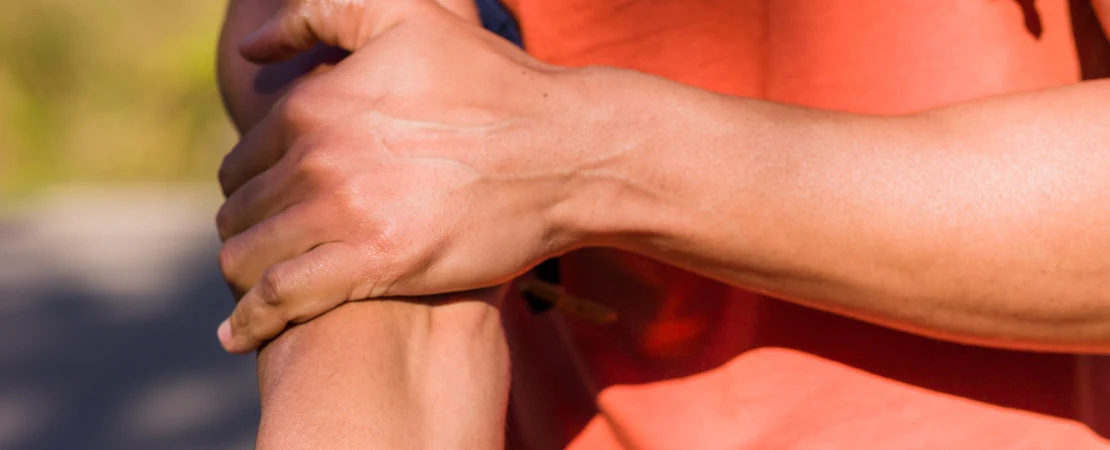
Updated on November 3, 2026

Written By
Harshitkumar Patel
Resident Physiotherapist
Musculoskeletal and Orthopedic Rehabilitation Expert
Musculoskeletal and Orthopedic Rehabilitation Expert

✓ Clinically Reviewed By:
Gunjan Vermani
Director and Registered Physiotherapist
20+ Years Experience
Clinical Specialties:
Central pain management, Concussion rehabilitation
Biceps Tendinopathy: Why That Front Shoulder Pain Won’t Go Away
Ever feel a nagging pain at the front of your shoulder — especially when lifting, pulling, or reaching behind your back? Or maybe it’s that dull ache that lingers long after your workout is done?
That could be biceps tendinopathy, and it’s far more common than most people realize.
As physiotherapists, we see this almost weekly in active adults across Ottawa — from gym-goers to swimmers to people whose jobs demand repetitive overhead work. Let’s break down what’s actually happening, and what helps.
What Is Biceps Tendinopathy?
Biceps tendinopathy is irritation or degeneration of the long head of the biceps tendon — the cord-like structure that runs from your biceps muscle into the front of your shoulder. This tendon helps:
- Stabilize the shoulder joint
- Assist with lifting and pulling
- Control overhead movement
When it’s overloaded beyond what it can tolerate, it becomes irritated, and that’s when pain starts.
A Quick Anatomy Note
Your biceps muscle has two tendons at the top:
- One attaches inside the shoulder joint (the long head)
- One attaches outside (the short head)
The long head is usually the culprit. It travels through a narrow groove at the front of the shoulder, which makes it more vulnerable to friction and irritation, particularly with repetitive loading.
Why Does It Happen?
This is almost always a gradual build-up, not a single traumatic injury. Common contributing factors include:
- Repetitive overhead activity (gym training, sports, manual work)
- Poor lifting technique
- Weak shoulder stabilizers
- Tight chest or shoulder muscles
- Sudden spikes in training load
It’s especially common in gym-goers, swimmers, and anyone doing frequent upper-body work — patterns we see often in our clinic at Physiocare.
What Does It Feel Like?
Typical symptoms include:
- Pain at the front of the shoulder
- Tenderness directly over the biceps tendon
- Pain when lifting, pulling, or curling
- Discomfort with overhead movements
- A dull ache that worsens with activity
A useful clinical clue: the pain is usually well localized to the front of the shoulder, not deep or diffuse inside the joint.
What’s Actually Happening Inside the Tendon?
When a tendon is repeatedly overloaded:
- Micro-stress accumulates faster than the tissue can repair
- The tendon structure becomes irritated or starts to degenerate
- Its capacity to tolerate load drops
- Pain increases with movement and use
This is an important distinction: tendinopathy is largely a problem of overload and reduced load tolerance, not classic inflammation. That’s why anti-inflammatory approaches alone often fall short, and why a structured loading program matters so much.
Why You Shouldn’t Ignore It
Pushing through shoulder pain tends to make things worse, not better. Left untreated, biceps tendinopathy can progress to:
- Chronic shoulder pain
- Reduced strength
- Muscle imbalances
- A higher risk of more serious shoulder injuries
The earlier it’s addressed, the more straightforward recovery tends to be.
How We Treat Biceps Tendinopathy at Physiocare
Our approach focuses on reducing irritation, restoring movement, rebuilding strength, and preventing recurrence. As a leading physiotherapy clinic in Ottawa, we tailor each plan to the individual rather than applying a one-size-fits-all protocol.
Manual Therapy (Hands-On Treatment)
- Gentle joint mobilizations to improve shoulder movement
- Soft tissue work to release tight surrounding muscles
- Helps reduce early pain and stiffness
Myofascial Release
- Targets tightness in the chest, shoulder, and upper arm
- Reduces tension and muscle knots
- Improves overall movement quality
Gentle Mobility Exercises
- Restore pain-free shoulder range of motion
- Prevent stiffness from setting in
- Encourage safe, controlled movement
Postural Correction & Ergonomics
- Improves shoulder and upper-body positioning
- Reduces ongoing strain on the biceps tendon
- Helps prevent recurring irritation
Modalities to Support Pain Relief and Recovery
We pair hands-on treatment with modern modalities, used selectively based on presentation:
- Cupping Therapy — improves local blood flow and reduces muscle tightness
- Laser Therapy — supports tissue-level healing and may reduce pain
- TENS (Electrical Pain Relief) — helps dampen pain signals, making early movement more comfortable
- IFC (Interferential Current Therapy) — targets deeper tissue, supports circulation
- Shockwave Therapy — often used for stubborn or chronic cases; evidence from a systematic review and meta-analysis supports extracorporeal shockwave therapy for several tendinopathies, particularly when combined with an exercise-based loading program, rather than as a standalone fix
- DOT (Deep Oscillation Therapy) — gentle option useful in early, irritable stages
- EMTT — aims to support healing at a cellular level in slower-recovering cases
These modalities can support comfort and recovery, but progressive exercise remains the cornerstone of evidence-based tendinopathy rehabilitation, helping restore tendon capacity and long-term function.
Patients with persistent shoulder pain may also benefit from individualized manual therapy to improve movement quality and reduce symptoms. For chronic tendon-related presentations that are slow to respond, therapeutic shockwave therapy may be considered as part of a broader rehabilitation program.
Progressive Strengthening
- Gradually reloads the biceps tendon at a tolerable, increasing dose
- Strengthens the rotator cuff and shoulder stabilizers
- Builds long-term tendon resilience
Education & Self-Management
- Guidance on modifying (not stopping) workouts
- Tips to avoid aggravating movements
- Simple home exercises
- Advice on posture and daily activity habits
Not every patient needs every treatment listed above — your plan is always built around your specific presentation, goals, and activity level.
Quick FAQs
How long does it take to heal?
Mild cases: 2–4 weeks. Moderate cases: 4–8 weeks. Persistent cases: 8–12+ weeks.
Should I stop working out?
No — modify instead. Avoid painful movements and train around the irritated area while staying active elsewhere.
Can I still do bicep curls?
Yes, generally — keep them light, controlled, and within a pain-free range early on, then progress gradually.
Will it go away on its own?
Sometimes, but it often lingers without proper rehab, since the underlying load tolerance issue doesn’t resolve on its own.
Things That Help vs. Things That Hurt
Helps:
- Gradual, progressive strengthening
- Proper lifting technique
- Consistency over time
- Listening to your body’s pain response
Makes it worse:
- Training through sharp pain
- Sudden spikes in training intensity
- Ignoring shoulder mechanics
Final Thought
Biceps tendinopathy can be frustrating, but it’s very treatable. It’s not about resting completely — it’s about progressively rebuilding a stronger, more resilient tendon.
With the right balance of smart loading, movement, and strength work, you can get back to pain-free training and stay there.
If shoulder pain is holding you back, physiotherapy in Ottawa at Physiocare can help you get a clear diagnosis and a personalized recovery plan.
A note on the evidence used above: Strong, biceps-tendinopathy-specific randomized trials are limited in the literature; most high-quality evidence on tendon loading comes from research on the Achilles, patellar, and lateral elbow tendons, with principles reasonably extrapolated to the biceps tendon given shared tissue biology. Where I’ve referenced shockwave therapy evidence, it specifically reflects findings in other tendons, not the biceps tendon directly — I want to be upfront about that rather than overstate the evidence base.
References:
- Ohio State University Sports Medicine — Tendinopathy Clinical Practice Guideline: confirms that progressive mechanical loading is an effective core management strategy for tendinopathy, and that isolated eccentric loading is not necessarily superior to other loading types such as heavy-slow resistance training.
- Elgendy MH, et al. (2023). Effectiveness of extracorporeal shockwave therapy in treatment of upper and lower limb tendinopathies: A systematic review and meta-analysis. Physiotherapy Research International.
- Escriche-Escuder A, Casaña J, Cuesta-Vargas AI (2020). Load progression criteria in exercise programmes in lower limb tendinopathy: a systematic review. BMJ Open, 10(11):e041433.
Safety note: This article is for general educational purposes and is not a substitute for individualized medical or physiotherapy assessment. If you have persistent, worsening, or severe shoulder pain, numbness, significant weakness, or pain following trauma, please consult a licensed physiotherapist or physician before starting any exercise program.
FAQs:
It develops from repeated overload of the long head biceps tendon, usually due to repetitive overhead activity, poor lifting mechanics, weak shoulder stabilizers, or sudden training increases — rarely from one single injury.
Tendinopathy involves gradual irritation and degeneration of tendon tissue without a complete rupture. A tear involves structural disruption, often sudden, with more significant weakness — usually requiring imaging to confirm the difference.
Yes, most cases respond well to conservative physiotherapy, including progressive loading exercises, manual therapy, and activity modification. Surgery is typically reserved for severe, persistent cases unresponsive to structured rehabilitation over several months.
Yes, with modification. Avoid sharp pain and reduce aggravating movements, but staying active through controlled, pain-free ranges actually supports tendon healing better than complete rest does.
Biceps tendinopathy pain is typically localized to the front of the shoulder, while rotator cuff issues often cause pain higher or to the side, especially with overhead reaching or sleeping on that shoulder.
Many people return to modified training within 2–4 weeks for mild cases. Moderate to persistent cases may take 8–12 weeks of progressive rehab before full, pain-free training resumes
They can support pain relief and recovery as adjuncts, but research suggests they work best alongside a structured strengthening program, not as a standalone fix for tendinopathy.
See a physiotherapist if pain persists beyond a week or two, worsens with daily activity, limits your range of motion, or doesn't improve with rest and basic activity modification.
Categories
About the Author

Harshitkumar Patel
Resident Physiotherapist | Certified in Acupuncture & Dry Needling | Physiocare Physiotherapy, Ottawa
View Full Bio
Ask Our Physiotherapist for More Information
Subscribe To Our Newsletter

Your health is our priority, and we’re committed to partnering with you to achieve your optimal wellness.