Physiocare Physiotherapy & Rehab Centre Ottawa
Now Open: Our 8th Location in
South Keys!
Updated on October 6, 2026

Written By
Harshitkumar Patel
Resident Physiotherapist
Musculoskeletal and Orthopedic Rehabilitation Expert
Musculoskeletal and Orthopedic Rehabilitation Expert

✓ Clinically Reviewed By:
Gunjan Vermani
Director and Registered Physiotherapist
20+ Years Experience
Clinical Specialties:
Central pain management, Concussion rehabilitation
What Is an AC Joint Sprain? A Physiotherapist’s Guide to Recovery
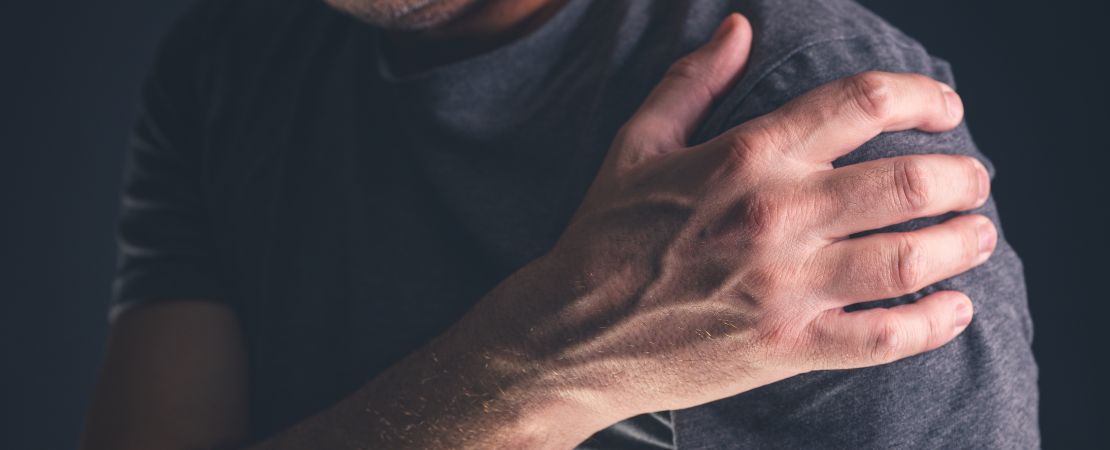
Ever landed awkwardly on your shoulder — or taken a hit during a sports game — and suddenly found that lifting your arm feels painful or weak?
That sharp, localized pain right on top of your shoulder could be an AC joint sprain, also known as a shoulder separation. It can make surprisingly simple things — reaching overhead, pulling on a shirt, or even sleeping on that side — genuinely uncomfortable.
As a physiotherapist, I see this injury regularly in both athletes and active adults. The good news? With the right approach, most people recover fully. Let’s break it down clearly so you know exactly what’s happening — and what to do about it.
Understanding Your Shoulder First
Your shoulder is one of the most mobile joints in your body — and the AC (acromioclavicular) joint plays a key role in that mobility and stability.
It’s where two bones meet:
- The clavicle (collarbone)
- The acromion (a bony projection of your shoulder blade)
This joint is held together by strong ligaments that:
- Keep the bones properly aligned
- Help transfer force from your arm through your upper body
- Provide stability during pushing, pulling, and overhead movement
When these ligaments stretch or tear, an AC joint sprain occurs.
So, What Exactly Is an AC Joint Sprain?
An AC joint sprain is an injury to the ligaments surrounding the acromioclavicular joint. Clinically, these injuries are graded using the Rockwood Classification system:
- Grade I — Mild ligament stretch, joint remains stable
- Grade II — Partial ligament tear, slight joint displacement
- Grade III — Complete ligament tear with visible joint deformity (a noticeable bump on the shoulder)
- Grades IV–VI — Severe displacement, typically requiring surgical consultation
Grades I and II are by far the most common in clinical practice and respond very well to physiotherapy. In higher-grade injuries, a small visible bump on top of the shoulder may appear — and in some cases, may remain even after full functional recovery.
How Does an AC Joint Sprain Happen?
Unlike neck stiffness or postural pain that can develop gradually, an AC joint sprain is almost always linked to a clear, identifiable event.
Common causes include:
- Falling directly onto the point of the shoulder
- Sports injuries — particularly hockey, football, cycling, and rugby
- A direct blow to the shoulder
- Landing on an outstretched arm
- A sudden, heavy, or uncontrolled load
It’s especially common in active individuals, contact sport athletes, and people who work in physically demanding environments.
What’s Happening Inside the Joint?
When the injury occurs, a cascade of events takes place:
- The AC and coracoclavicular ligaments are stretched or torn
- The joint becomes unstable or irritated
- Localized inflammation builds in the joint space
- Shoulder movement — especially overhead — becomes painful
- Your body recruits surrounding muscles to protect the joint, which can reduce your range of motion further
This is a protective response, but without proper rehabilitation it can lead to persistent stiffness, weakness, and compensatory movement patterns.
What Does an AC Joint Sprain Feel Like?
Symptoms vary depending on severity, but most people notice a consistent pattern:
- Sharp pain on the top of the shoulder, especially with movement
- Point tenderness directly over the AC joint
- Pain when lifting the arm overhead or across the body
- Discomfort when lying on the affected side
- Weakness or limited range of motion
- A visible step deformity or bump in more severe cases
A key clinical sign: the pain is very localized — right at the AC joint itself, not diffuse across the shoulder. This helps distinguish it from rotator cuff injuries or glenohumeral joint problems.
Are You at Risk?
You may be more susceptible to this injury if:
- You play contact or high-impact sports
- You’ve had a previous shoulder injury on the same side
- You train with poor technique — particularly in overhead or pressing movements
- You have weak or poorly coordinated shoulder stabilizing muscles
From a clinical perspective, shoulder rehabilitation programs commonly emphasize strengthening of the scapular stabilizers and rotator cuff muscles because these structures contribute to dynamic shoulder stability during athletic and overhead activities. Many patients may also benefit from individualized manual therapy as part of a comprehensive rehabilitation plan.
A 2022 clinical concepts review on shoulder injury prevention highlights the importance of scapular muscle function and rotator cuff conditioning in maintaining shoulder stability during sport and overhead activity (British Journal of Sports Medicine review).
What Happens If You Leave It Untreated?
It can be tempting to dismiss this as “just a shoulder tweak” — but untreated AC joint sprains can lead to real, lasting problems:
- Persistent or chronic shoulder pain
- Ongoing joint instability
- Reduced strength and function
- Difficulty returning to sport or physically demanding work
- Long-term joint degeneration or post-traumatic arthritis
A 2021 review published in the Journal of Shoulder and Elbow Surgery confirmed that early physiotherapy-led rehabilitation significantly improves outcomes in Grade I–III AC joint injuries and reduces the likelihood of surgical intervention. Early management genuinely makes a meaningful difference.
How We Treat AC Joint Sprains at Physiocare
At our physiotherapy clinic in Ottawa, treatment is structured, evidence-based, and individualized to where you are in your recovery. The goal is to reduce pain, restore full movement, rebuild strength, and get you back to everything you want to do — safely and confidently.
Early Stage: Pain Relief and Protection
- Activity modification to avoid aggravating movements
- Short-term support with taping or a sling if needed
- Gentle, pain-free range of motion to prevent stiffness
The goal here is to calm the joint down — without letting the shoulder seize up.
Manual Therapy
- Gentle joint mobilizations to restore natural movement
- Soft tissue release for surrounding muscles that have tightened protectively
- Reduces pain and improves joint mechanics
Targeted Exercise Therapy
This is the cornerstone of recovery. We progressively introduce:
- Range of motion exercises to restore full shoulder movement
- Rotator cuff strengthening to rebuild active joint support
- Scapular stability work — often overlooked, but critical
- Functional strengthening for your specific daily activities, sport, or job
Movement is the medicine — but it has to be the right movement, at the right time, with the right load.
Postural and Movement Correction
- Improve overall shoulder mechanics and posture
- Correct lifting and pressing technique
- Address muscle imbalances that contributed to the injury
This step is what prevents re-injury — not just resolving the current one.
Supportive Modalities
Depending on your presentation, we may incorporate adjunct treatments to support your recovery:
- Laser Therapy — Reduces inflammation and supports tissue healing at the cellular level
- TENS / IFC — Helps manage pain and makes early movement more comfortable
- Shockwave Therapy — Particularly useful for persistent or stubborn pain that isn’t responding to standard treatment
- Taping Techniques — Supports the AC joint and reduces strain during daily movement
These modalities are helpful support tools — but progressive exercise is what truly restores function.
Progressive Return to Activity
- Structured, gradual return to gym, sport, or demanding work tasks
- Sport-specific or job-specific rehabilitation in the later stages
- Focus on control, strength, and rebuilding confidence in the shoulder
Education and Self-Management
We make sure you leave every session with clarity:
- How to move safely through the day
- What to avoid in the early stages — and for how long
- Sleeping position advice to reduce nighttime discomfort
- A home exercise program that supports your in-clinic work
The goal is not just getting you better — it’s keeping you better.
What the Research Says
Evidence strongly supports physiotherapy-led care for AC joint sprains:
- Babhulkar & Pawaskar (2021) — Journal of Shoulder and Elbow Surgery: Conservative management with structured rehabilitation produced equivalent functional outcomes to surgery in Grade III AC joint injuries in most active patients, with fewer complications.
- Longo et al. (2022) — Muscles, Ligaments and Tendons Journal: Progressive exercise therapy targeting rotator cuff and scapular stabilizers significantly improved pain and function scores at 12-week follow-up in patients with Grade I–II AC joint sprains.
- Canadian Physiotherapy Association Clinical Practice Guidelines (2023): Recommend early mobilization combined with progressive strengthening as the first-line treatment for non-surgical AC joint injuries, with surgical referral reserved for high-grade or functionally limiting cases.
⚠️ Clinical Safety Note: This blog is intended for general educational purposes only and does not replace individualized medical or physiotherapy assessment. If you have experienced a significant shoulder injury, please consult a registered physiotherapist or physician before beginning any rehabilitation program. Grades IV–VI AC joint injuries may require orthopedic evaluation.
Typical Recovery Timeline
Severity | Approximate Recovery |
Mild (Grade I) | 2–4 weeks |
Moderate (Grade II) | 4–8 weeks |
Severe (Grade III) | 8–12+ weeks |
Individual recovery timelines vary based on age, overall health, activity level, and how early treatment begins.
Final Thought
An AC joint sprain can be painful and limiting — but it is highly treatable with the right approach.
With the right balance of protection in the early stage, progressive movement, and targeted strengthening, the vast majority of people recover fully and return to everything they were doing before the injury.
The key insight from clinical practice: don’t push through pain early — but don’t avoid movement either. Address it early, rehab it properly, and your shoulder will genuinely thank you.
If you’re dealing with shoulder pain after a fall or impact, our team at Physiocare — leading physiotherapy in Ottawa is here to help you recover with confidence.
FAQs:
Mild Grade I sprains may settle with rest and ice initially, but professional assessment is strongly recommended. A physiotherapist can confirm the grade, rule out fractures, and provide a tailored plan — reducing your risk of chronic pain or re-injury significantly.
Surgery is typically reserved for Grade IV–VI injuries with significant joint displacement or for Grade III cases that fail conservative treatment. Most Grade I–III sprains respond very well to physiotherapy alone, without the need for surgical intervention.
Yes — with appropriate modifications. Avoid heavy overhead pressing, behind-the-neck movements, and cross-body loading early on. A physiotherapist can guide you through safe alternatives that maintain fitness while protecting the healing joint.
Persistent pain often indicates insufficient rehabilitation rather than ongoing structural damage. Without targeted strengthening and movement retraining, the joint remains vulnerable. Starting physiotherapy — even weeks after injury — can significantly accelerate your recovery.
In Grade II–III injuries, a visible bump or step deformity may persist even after full functional recovery. Structurally the appearance may not fully normalize, but shoulder strength, movement, and daily function can return completely with proper rehabilitation.
Sling use is typically short-term — often 3 to 7 days for Grade I–II injuries — and is not always necessary. Prolonged immobilization can cause stiffness and muscle weakness. Your physiotherapist will determine the appropriate duration for your specific case.
Yes — untreated or poorly managed AC joint injuries can contribute to post-traumatic acromioclavicular arthritis over time. This is another strong reason to address the injury properly and early, rather than simply waiting for pain to subside on its own.
Scapular stabilization exercises, rotator cuff strengthening, and gentle pendulum movements are foundational early on. As healing progresses, functional pressing and pulling patterns are gradually reintroduced. A structured, progressive program prescribed by a physiotherapist produces the most reliable and lasting results.
Categories
About the Author

Harshitkumar Patel
Resident Physiotherapist | Certified in Acupuncture & Dry Needling | Physiocare Physiotherapy, Ottawa
View Full Bio
Ask Our Physiotherapist for More Information
Subscribe To Our Newsletter
Your health is our priority, and we’re committed to partnering with you to achieve your optimal wellness.